
Uncategorized
My Easy White Pizza Sauce Recipe Without Heavy Cream

A rich pizza doesn’t need heavy cream to taste indulgent. I make my white pizza sauce with butter, milk, garlic, and Parmesan, and it turns out silky every time.
It’s the sauce I reach for when I want something creamy without opening a carton of cream. It works for pizza, pasta, breadsticks, and quick dipping, so one small pan does a lot of work.
I keep this recipe in my back pocket because it feels special without asking for much. The ingredient list is short, the method is simple, and the result is easy to love.
Why I Keep This White Pizza Sauce in My Back Pocket
I like recipes that feel calm on a busy night, and this one does. It comes together fast, uses familiar ingredients, and still tastes like I spent more time on dinner than I did.
The flavor is mild, garlicky, and savory. The texture is creamy enough to cling to dough, but light enough that it doesn’t feel heavy after a few bites. That matters when I’m loading a pizza with cheese or using the sauce on pasta.
This sauce also gives me room to play. I can keep it simple for a plain cheese pizza, or I can add herbs and pepper for more depth. Either way, I get a smooth base that makes the whole dish taste more complete.
I stop cooking the sauce while it still looks a little loose. It thickens more as it cools.
The Simple Ingredients I Reach For
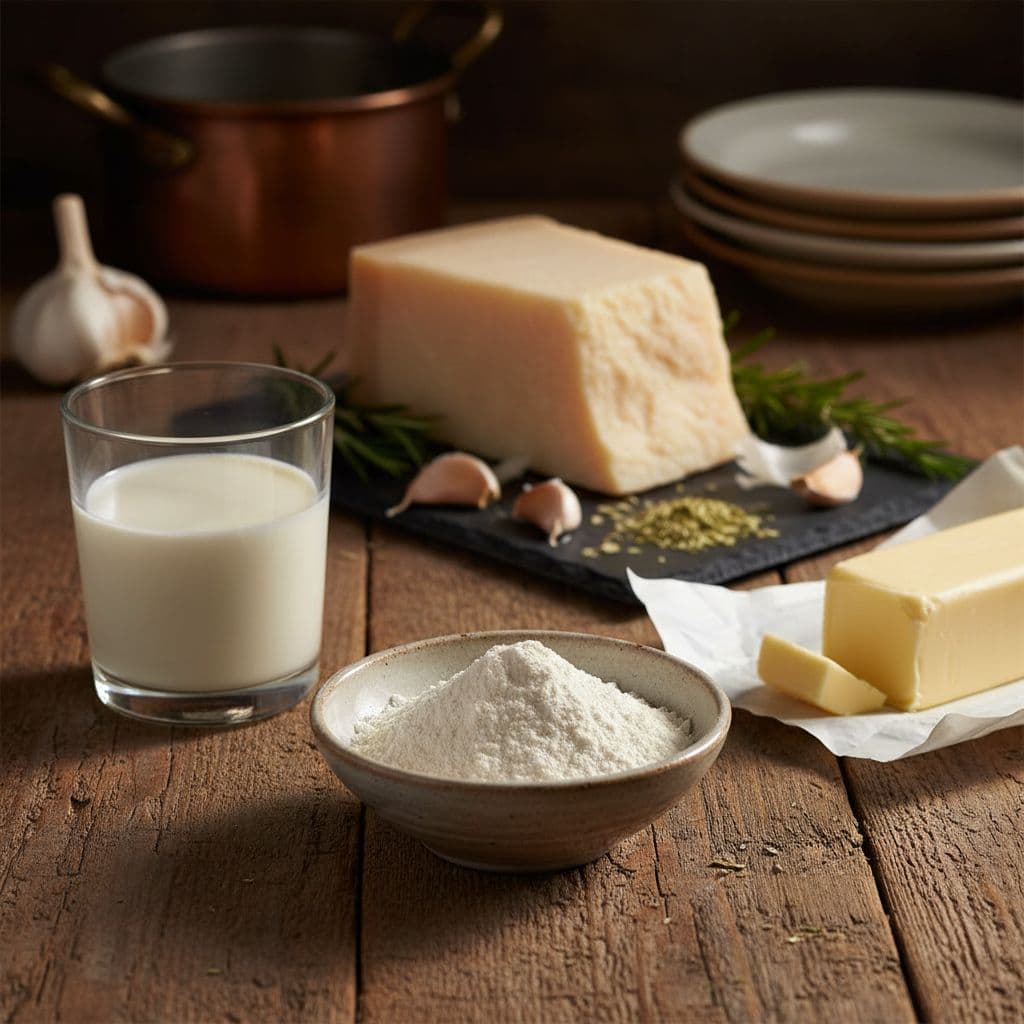
I keep the ingredient list short on purpose. When the sauce only needs a few things, it’s easier to make on a weeknight and easier to remember later.
Ingredients
- 2 tablespoons unsalted butter
- 2 cloves garlic, finely minced
- 2 tablespoons all-purpose flour
- 1 cup whole milk, warmed
- 1/2 cup finely grated Parmesan cheese
- 1/4 teaspoon kosher salt, plus more to taste
- 1/8 teaspoon black pepper
- 1/4 teaspoon dried Italian seasoning, optional
- pinch of red pepper flakes, optional
I use whole milk when I can because it gives the sauce better body. If I only have 2% milk, I still make it. I just let the sauce simmer a little longer so it thickens well.
Freshly grated Parmesan melts more smoothly than the pre-shredded kind. That small choice makes a difference, especially if I want the sauce to stay glossy instead of grainy. Warm milk also helps, because cold milk can slow everything down and make the sauce take longer to thicken.
How I Make It Smooth and Creamy
The method is easy enough for a beginner. I stay close to the pan, whisk often, and keep the heat steady. That’s the whole trick.
- I melt the butter in a small saucepan over medium-low heat.
- I add the minced garlic and cook it for about 30 seconds, just until fragrant. I don’t want it browned.
- I whisk in the flour and cook it for 1 minute. It should look like a smooth paste.
- I slowly pour in the warm milk while whisking the whole time. This keeps the sauce smooth.
- I cook the sauce for 3 to 5 minutes, until it starts to thicken and coat the back of a spoon.
- I remove the pan from the heat and stir in the Parmesan, salt, pepper, and Italian seasoning.
- I taste it and adjust the seasoning before I spread it on pizza or use it another way.
The sauce should look glossy and feel velvety. If it seems a little thin at first, I give it another minute on the stove. If it gets too thick, I loosen it with a splash of warm milk.
Once the sauce is ready, I spread it over the dough in a thin layer.
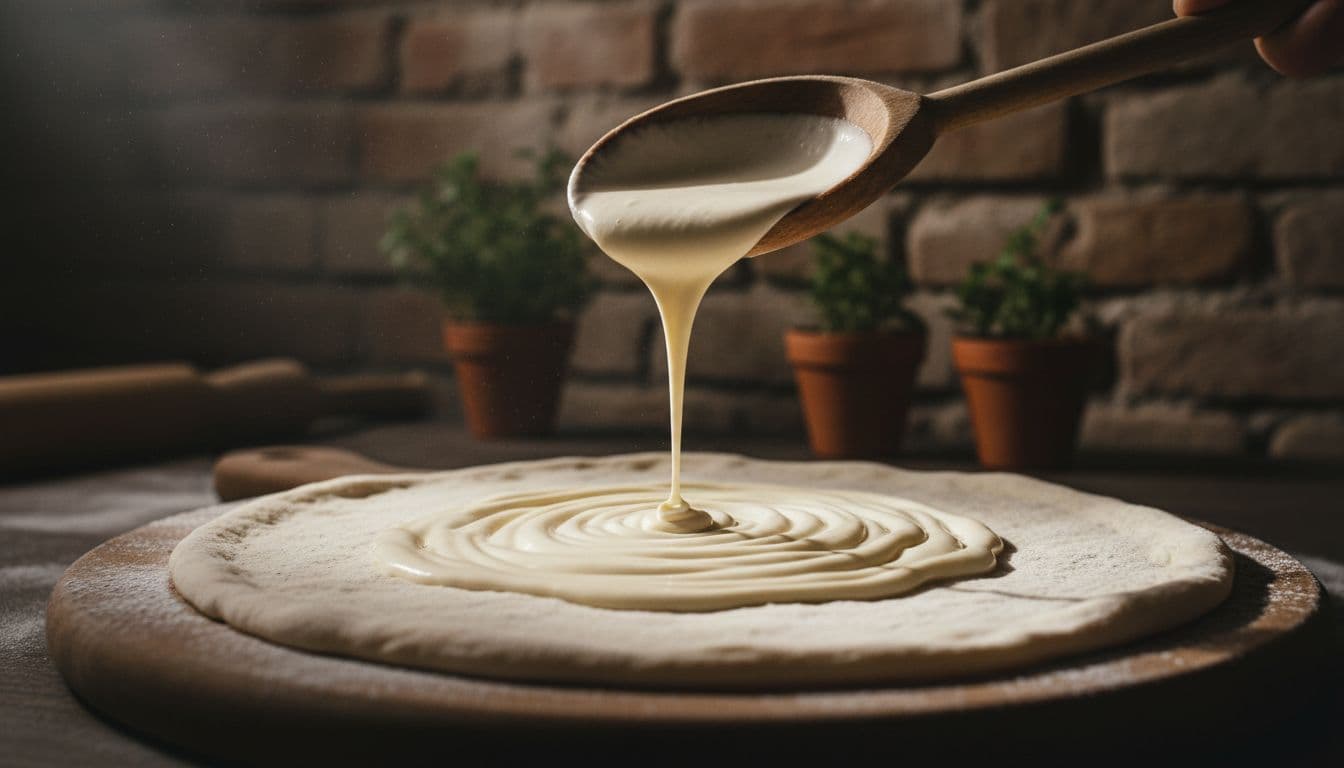
I leave a small border around the edge so the crust can rise and brown. That little ring makes the pizza look neat and helps the edges stay crisp.
Easy Swaps When I Need a Different Flavor
I don’t treat this sauce like a rigid formula. Small changes can shift the flavor in useful ways, especially if I’m matching the sauce to the toppings I already have.
- I use 2% milk when needed, although whole milk gives me a richer finish.
- I swap some of the Parmesan for Romano when I want a sharper taste.
- I add a pinch of nutmeg when I want a more classic creamy sauce flavor.
- I skip the garlic if I’m serving picky eaters or want a softer taste.
- I add a little red pepper flake when I want the sauce to have a tiny kick.
I keep those swaps simple because the sauce already does its job well. A few small changes are enough to make it feel new without turning it into a different recipe.
If I’m making the sauce for pasta, I sometimes leave it a touch looser. If I’m making pizza, I let it thicken a little more. That way the texture fits the meal instead of fighting it.
How I Fix Sauce That Is Too Thin or Too Thick
Sauce can change fast on the stove, so I keep a simple fix for each problem. If I watch the texture instead of the clock, I usually land in the right place.
| Problem | What I do |
|---|---|
| Sauce is too thin | I simmer it uncovered for 1 to 2 more minutes. If I need more help, I whisk 1 teaspoon flour with 1 tablespoon cold milk, stir it in, and cook until smooth. |
| Sauce is too thick | I add warm milk, 1 tablespoon at a time, and stir after each splash. |
| Sauce looks grainy | I lower the heat and whisk gently. Too much heat can make the cheese tighten up. |
I like the sauce best when it spreads easily but still clings to the crust. That middle point gives me a pizza that tastes creamy without feeling soggy.
If it ever looks a little off, I don’t panic. A minute on low heat or a small splash of milk usually brings it right back.
Ways I Use the Sauce Beyond Pizza
A good batch rarely stays on pizza alone. Once I’ve made it, I find myself using it in a few different ways during the same week.
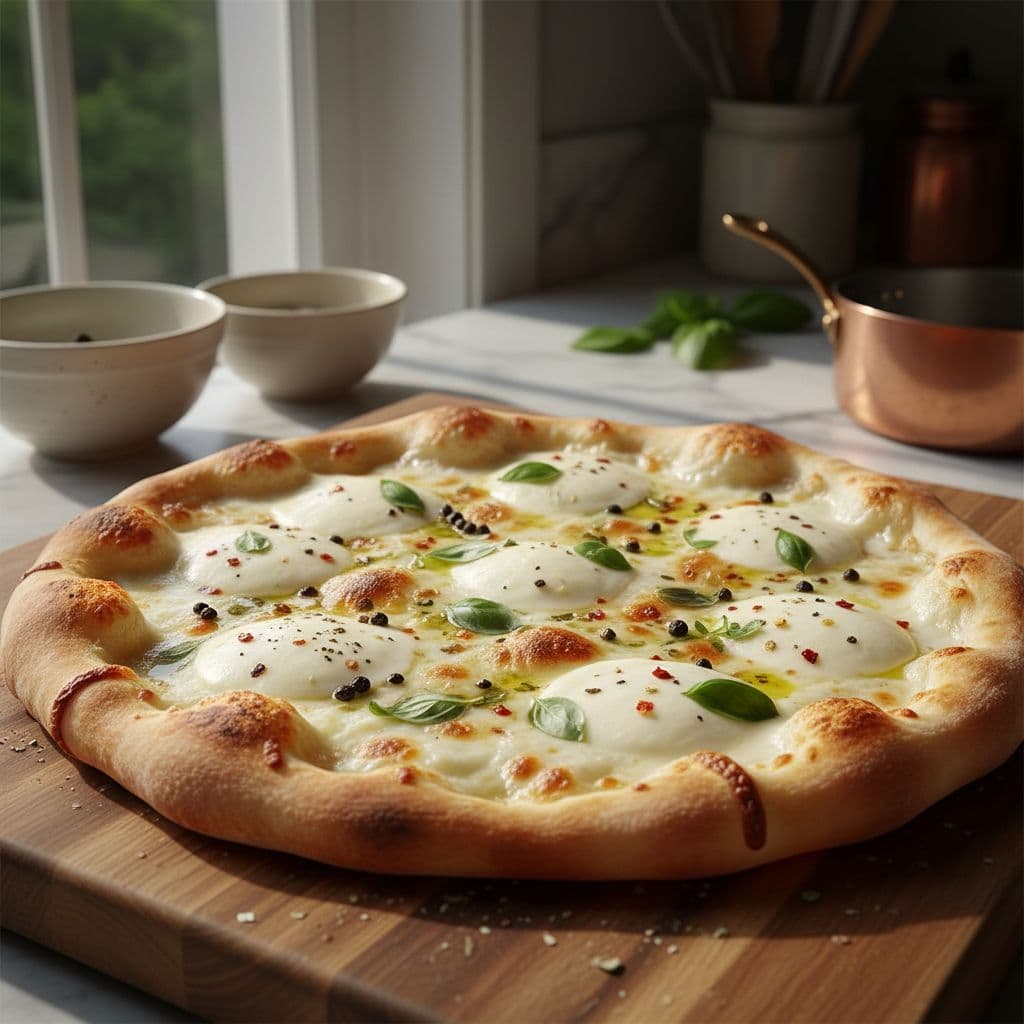
I love how it looks under mozzarella and fresh herbs. The pale sauce lets the toppings stand out, and the finished pizza feels cozy and familiar.
- For pizza, I spread it on the dough, then add mozzarella, chicken, spinach, mushrooms, or roasted garlic.
- For pasta, I toss it with fettuccine, penne, or rotini for a quick creamy dinner.
- For breadsticks, I warm it slightly and serve it as a dip on the side.
- For dipping, I put it next to calzones, garlic knots, chicken tenders, or roasted vegetables.
This sauce also works well with leftovers. If I have cooked chicken or vegetables in the fridge, I can turn them into a simple meal with very little effort. That makes the recipe feel practical, not fussy.
Conclusion
This white pizza sauce is the kind of recipe I keep making because it stays easy, creamy, and dependable. It gives me the rich flavor I want without heavy cream, and it uses ingredients I usually already have.
I like that it works in more than one place, too. One small saucepan can lead to pizza night, a bowl of pasta, or a warm dip for breadsticks.
If you want a simple sauce that tastes homey and polished at the same time, this one belongs in your rotation. It’s proof that creamy doesn’t have to mean complicated.