
Uncategorized
My Easy Green Goddess Dressing for Salads and Sandwiches

A good dressing can make a plain salad feel finished, and my green goddess dressing does the same for sandwiches. I keep it creamy, bright, and packed with herbs, so it tastes fresh without much effort.
I reach for it when I want one homemade sauce that works in more than one place. One batch can dress a bowl of greens at lunch and turn into a spread for dinner sandwiches. Here’s how I make it and keep the texture right.
The ingredients I keep in my green goddess dressing
I like this dressing because the ingredient list stays simple, but the flavor still feels lively. The herbs do most of the work, so I choose ones that taste clean and fresh.
Here’s what I use:
- Plain Greek yogurt, for tang and body
- Mayonnaise, for a smooth, rich texture
- Fresh herbs, usually parsley, chives, and basil
- Garlic, just enough to give the dressing some bite
- Lemon juice, for brightness
- Dijon mustard, for balance
- Water or buttermilk, to loosen the dressing
- Salt and black pepper, to finish it
I often swap the herb mix depending on what I have. Parsley is my base, because it keeps the dressing green and crisp-tasting. Basil adds sweetness, chives add a mild onion note, and dill gives it a little extra lift.
If I want a lighter version, I use more yogurt and less mayo. If I want a richer spread for sandwiches, I do the opposite. That small change makes the dressing feel like two recipes in one.
How I make it in one blender
I make this green goddess dressing in a small blender or food processor. That keeps the herbs smooth and saves me from a lot of chopping.
- I add the yogurt, mayonnaise, herbs, garlic, lemon juice, Dijon, salt, and pepper to the blender.
- I blend until the herbs break down and the dressing looks mostly smooth.
- I scrape down the sides, then blend again so nothing stays chunky.
- I pour in a little water or buttermilk until I like the texture.
- I taste it and adjust the lemon, salt, or pepper before serving.
The garlic can get strong fast, so I start with a small clove. If I want a softer flavor, I use half a clove. That keeps the dressing balanced instead of sharp.
I start with a thicker base, because it’s easy to thin it later. Once a dressing turns runny, it’s harder to fix.
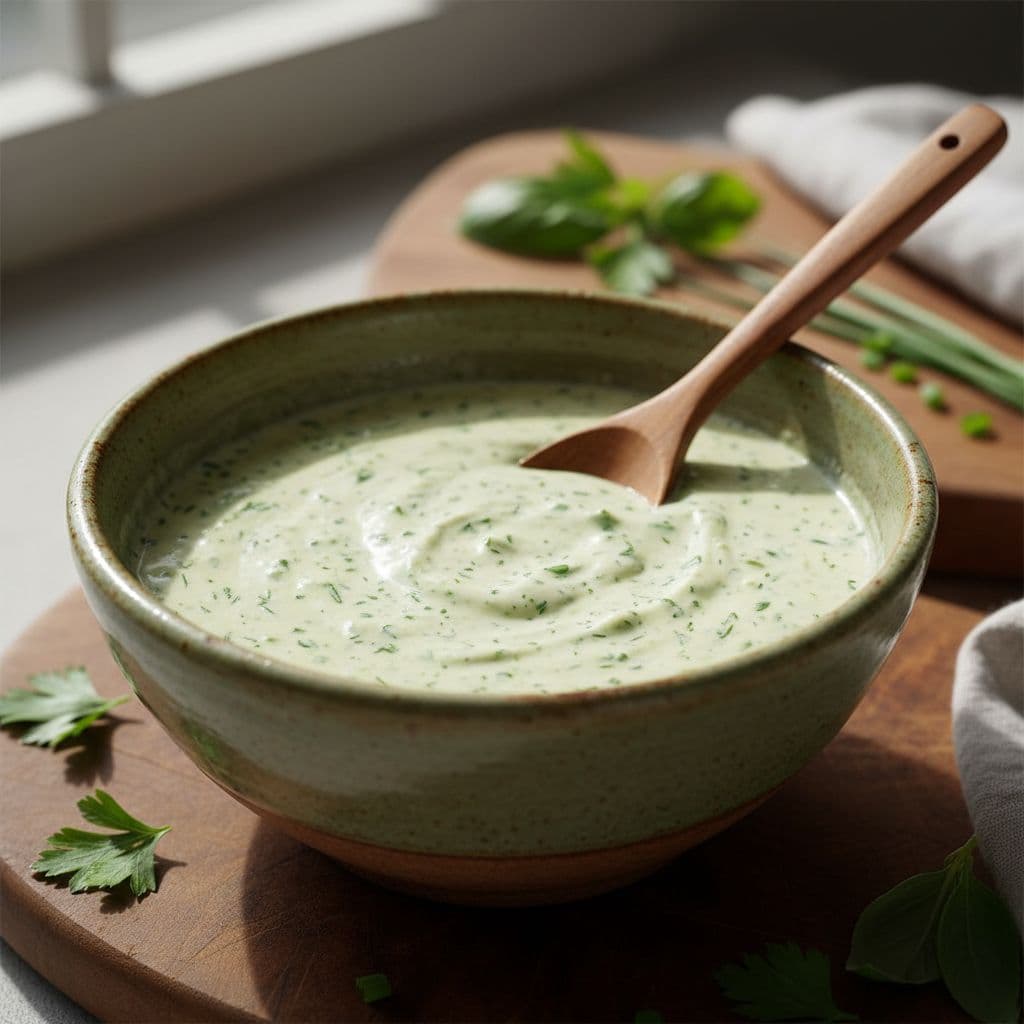
Getting the texture right for salads and sandwiches
This part matters more than people think. The same dressing can act like a pourable sauce or a thick spread, depending on how I finish it.
I like to start with a base that’s a little thicker than I need. Then I adjust it at the end.
| Use | Texture I want | How I adjust it |
|---|---|---|
| Salads | Pourable and smooth | I add more water, buttermilk, or lemon juice |
| Sandwiches | Thick and spreadable | I use less liquid and a little more yogurt or mayo |
For salads, I want the dressing to coat the leaves without pooling at the bottom of the bowl. For sandwiches, I want it to stay in place and hold up against tomatoes, cucumbers, and greens.
That small difference changes everything. A thin dressing disappears into lettuce. A thicker one clings to bread and keeps each bite flavorful.
The ways I use it all week
I love this dressing because it slips into so many meals. It feels simple, but it makes basic food taste more finished.
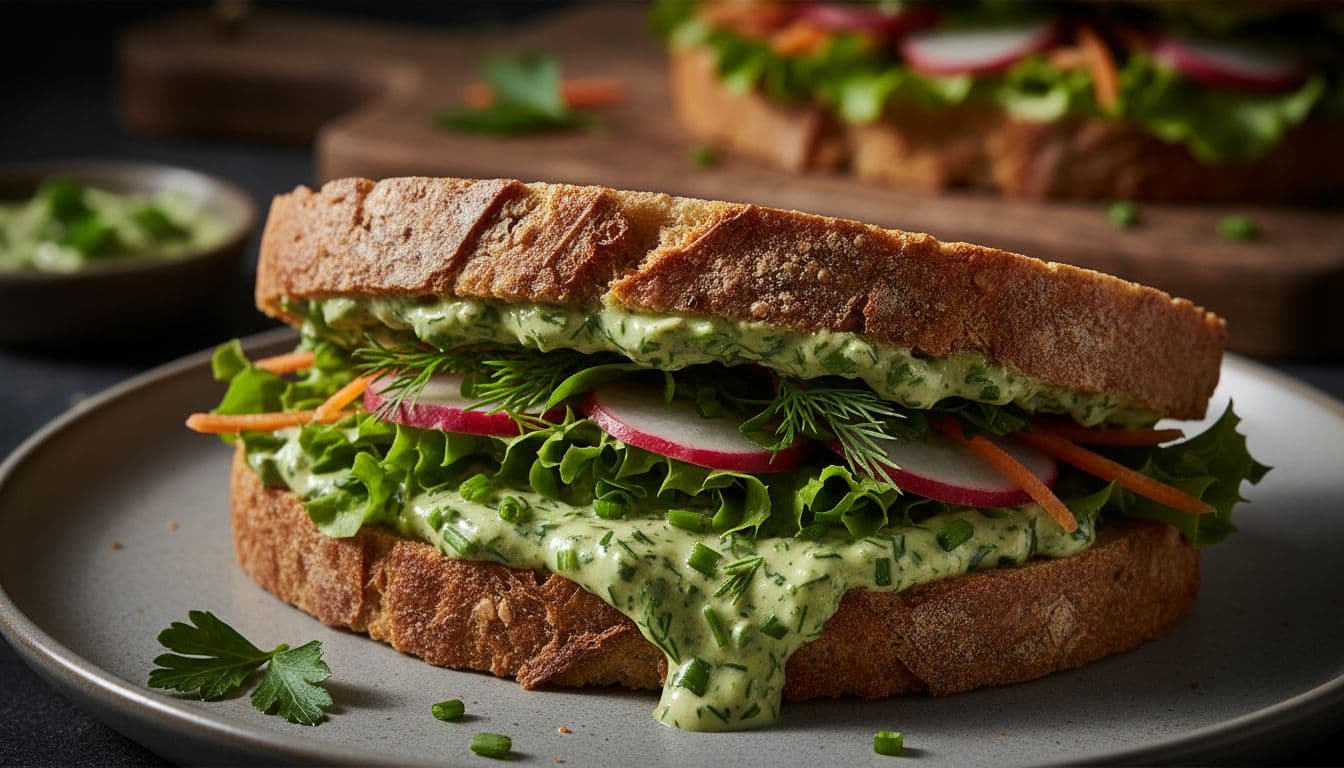
These are the ways I use it most often:
- I toss it with romaine, cucumber, and radish for a quick side salad.
- I spoon it over chicken or chickpeas when I want lunch to feel less plain.
- I spread it on sourdough, then stack it with lettuce, tomato, and sliced avocado.
- I tuck it into wraps with turkey, cucumbers, or roasted vegetables.
- I use it as a dip for carrots, celery, and snap peas.
I especially like it on sandwiches with crunchy vegetables. The herbs cut through rich fillings, and the lemon keeps the whole thing tasting bright. On a salad, it works almost like a fresh version of ranch, but with more herbal flavor.
If I’m serving it at a casual lunch, I put a small bowl on the table and let everyone use it as they like. That makes it easy to drizzle on greens or spread on bread.
How I store it and keep it tasting bright
I store my dressing in a sealed jar in the fridge. It usually keeps well for up to 5 days, and the flavor stays best in the first few days.
The dressing often thickens after chilling, so I stir it before using it. If it gets too thick, I add a teaspoon of water or lemon juice and shake it again. That brings back the smooth texture fast.
Fresh herbs can darken a bit over time, which is normal. I give the jar a quick smell and taste before using the dressing again. If the flavor still tastes clean and the texture looks good, it’s ready.
Conclusion
This is the kind of recipe I keep coming back to because it’s useful, not fussy. My green goddess dressing comes together fast, tastes bright, and works on both salads and sandwiches.
I like having one simple dressing that can do two jobs well. When I keep the texture flexible and the herbs fresh, I end up with something I can use all week.