
Uncategorized
My Easy Enchilada Sauce Recipe for Tacos and Casseroles

I reach for homemade enchilada sauce when I want dinner to taste like I spent more time on it than I did. A small pot, a few pantry spices, and about 15 minutes are enough for a sauce that feels rich, warm, and a little smoky.
This enchilada sauce recipe is one I keep on repeat because it works on tacos, baked casseroles, and leftover chicken. It also lets me control the heat, which matters when I’m cooking for a mixed crowd.
If you’ve only bought sauce in a can, this version is a great place to start. I’m keeping it simple, practical, and easy to adjust.
Why I keep this sauce in my weeknight rotation
I love recipes that pull their weight, and this one does. The flavor is deep enough for enchiladas, but it’s mild enough to pour over tacos without overpowering everything else.
It also uses ingredients I usually already have. That means I can make it when the fridge looks bare and still end up with dinner that feels complete. The sauce thickens fast, smells amazing while it simmers, and tastes even better after it rests for a few minutes.
Best of all, I can scale the flavor without changing the whole recipe. A little extra chili powder gives me more bite. A longer simmer gives me a thicker, richer sauce.
What I use for a simple homemade enchilada sauce
This batch makes about 2 cups. That’s enough for a pan of enchiladas, a casserole, or several taco dinners.
- 3 tablespoons neutral oil
- 3 tablespoons all-purpose flour
- 2 tablespoons chili powder
- 1 teaspoon ground cumin
- 1 teaspoon garlic powder
- 1/2 teaspoon onion powder
- 1/2 teaspoon dried oregano
- 1/4 teaspoon smoked paprika, optional
- 2 tablespoons tomato paste
- 2 cups low-sodium chicken or vegetable broth
- 1 teaspoon apple cider vinegar
- 1/2 teaspoon salt, plus more to taste
I use low-sodium broth so I can season the sauce at the end. The tomato paste gives the sauce a little body and a deeper red color. If I want a softer flavor, I use mild chili powder. If I want more warmth, I choose a medium or hot blend.
How I make it, step by step
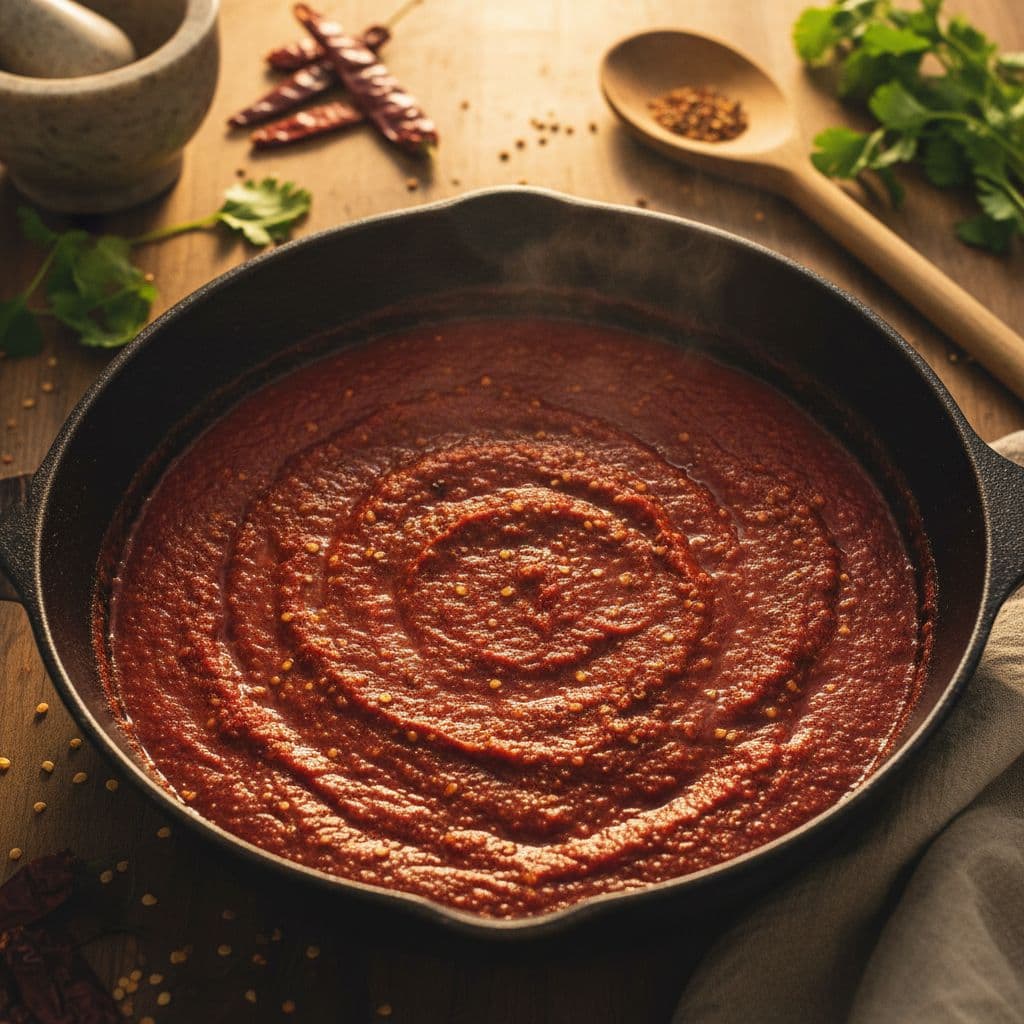
This part is simple, but the order matters. I build the flavor in layers so the sauce tastes smooth instead of flat.
- I heat the oil in a medium saucepan over medium heat.
- I whisk in the flour and cook it for about 1 minute. It should look foamy and smell a little nutty.
- I add the chili powder, cumin, garlic powder, onion powder, oregano, and paprika. Then I whisk for about 30 seconds.
- I stir in the tomato paste until it blends into the spice mixture.
- I slowly whisk in the broth a little at a time. This keeps the sauce smooth.
- I bring it to a gentle simmer and cook for 8 to 10 minutes, stirring often, until it thickens slightly.
- I take it off the heat, stir in the vinegar and salt, then taste and adjust.
If I see a few tiny lumps, I keep whisking and they usually disappear. A gentle simmer is the goal here. A hard boil can make the sauce taste harsh.
I keep the heat low once the broth goes in. That gives the spices time to bloom without turning bitter.
How I adjust heat and thickness
I like this sauce because it’s easy to steer in the direction I need. A small change can make it mild enough for kids or bold enough for spicy tacos.
| Situation | What I do |
|---|---|
| I want a milder sauce | I use 1 tablespoon chili powder and skip the smoked paprika. |
| I want more heat | I add a pinch of cayenne or use a hotter chili powder. |
| I want a thicker sauce | I simmer it 2 to 3 minutes longer. |
| I want a thinner sauce | I whisk in a little more broth, 1 tablespoon at a time. |
If the sauce tastes too sharp, I let it simmer for another minute or two. That often smooths things out. If it’s too thick after resting, I loosen it with a splash of broth right before serving.
My favorite ways to use it for tacos and casseroles
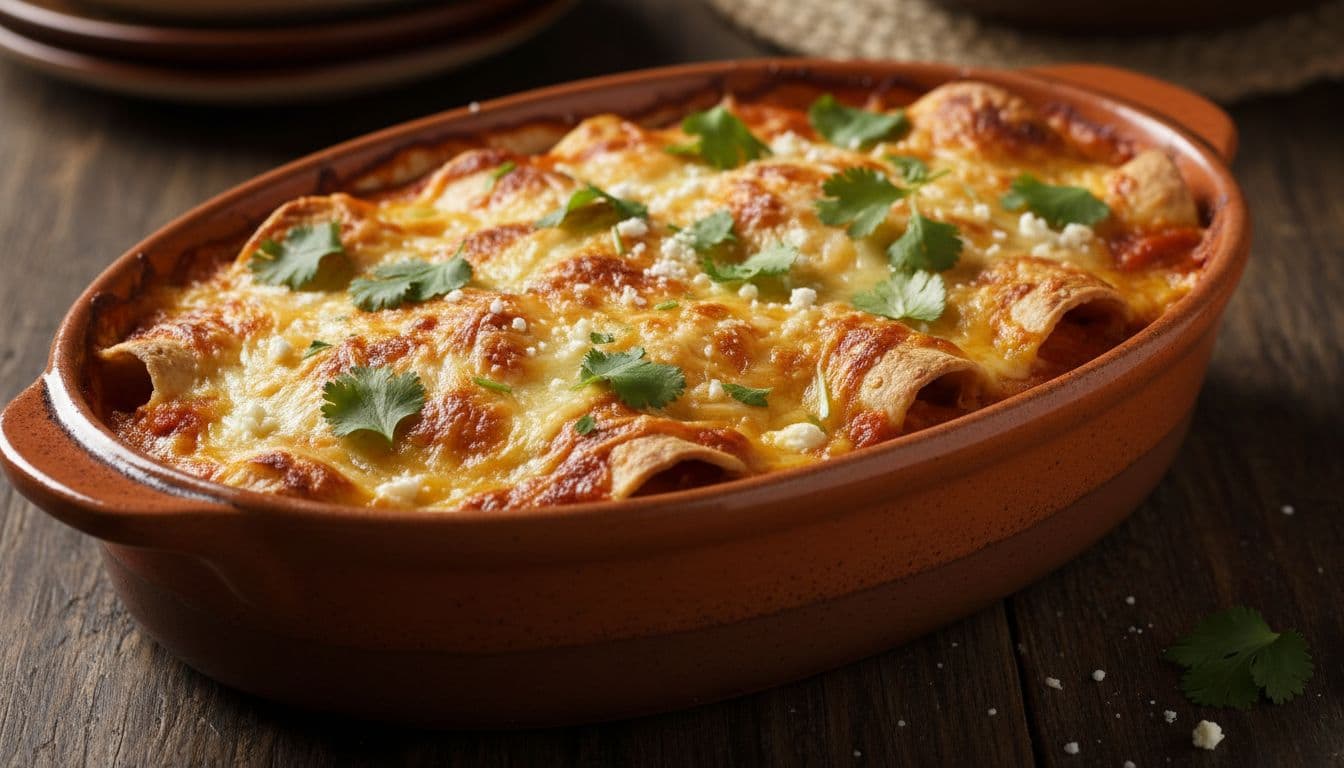
For tacos, I spoon this sauce over shredded chicken, ground turkey, black beans, or roasted vegetables. It adds moisture without making the filling watery, which matters if I’m serving soft tacos and want each bite to hold together.
For casseroles, I use it as the glue that brings everything into one dish. I usually start with a thin layer in the baking pan, then add tortillas, filling, sauce, and cheese. After that, I repeat the layers until the dish is full. That keeps the bottom from drying out and gives the top a nice, bubbly finish.
These are the ways I use it most often:
- shredded chicken tacos with cabbage and avocado
- black bean and corn enchiladas
- beef or turkey tortilla casseroles
- breakfast bakes with eggs, potatoes, and cheese
I also like it on leftovers. A spoonful over rice, beans, or scrambled eggs turns a plain plate into something more satisfying.
Easy substitutions I actually use
This sauce is flexible, which is one reason I make it so often. If I’m missing one ingredient, I usually have a simple backup.
- I use vegetable broth when I want the sauce to stay meat-free.
- I swap in avocado oil or olive oil if I’m out of neutral oil.
- I make it gluten-free by using a cornstarch slurry instead of flour. I whisk 1 1/2 tablespoons cornstarch with 2 tablespoons cold broth, then stir it into the simmering sauce near the end.
- I use regular paprika if I don’t have smoked paprika.
- I choose a milder chili powder when I’m serving kids or anyone who prefers less heat.
If I only have salted broth, I cut back on the added salt at the end. That keeps the sauce from tasting too salty after it reduces.
Storage, freezer, and make-ahead tips
This sauce keeps well, which makes it even easier to love. I often make it ahead, then pull it out when I’m ready to assemble dinner.
- In the fridge, I store it in an airtight jar or container for up to 5 days.
- In the freezer, I keep it for up to 3 months.
- I freeze it in small portions when I only need a little for tacos.
- To reheat, I warm it over low heat and whisk in a splash of broth if it thickened too much.
The flavor settles nicely after a day in the fridge, so I don’t mind making it ahead at all. If I know I’m planning tacos or a casserole later in the week, I make the sauce first. That saves time and takes one more job off my plate.
When the sauce needs fixing
Even a simple sauce can need a small adjustment. I’ve had every version happen at least once, and the fixes are easy.
- If it’s too thick, I whisk in warm broth a tablespoon at a time.
- If it’s too thin, I simmer it uncovered for a few more minutes.
- If it’s too spicy, I add a little more broth and a spoonful of tomato paste, then taste again.
- If it tastes flat, I add a pinch more salt or a tiny splash of vinegar.
Most of the time, the sauce just needs a minute more on the stove. Once it relaxes, the flavor comes together fast.
Conclusion
I keep this enchilada sauce recipe close because it solves dinner without making it complicated. It turns simple taco fillings and casseroles into something that feels finished and comforting.
Once I have the base down, I can make it milder, thicker, or a little bolder without starting over. That kind of flexibility is what makes a good sauce worth keeping around.