
Uncategorized
My Go-To Peanut Sauce Recipe for Spring Rolls and Noodles

When I need dinner to taste better fast, I make peanut sauce. It takes about five minutes, uses pantry staples, and turns plain noodles or fresh spring rolls into something I look forward to eating.
I come back to this easy peanut sauce recipe because it’s forgiving. If I want it thick, I keep it snug for dipping. If I want it silky, I add a splash of warm water and toss it with noodles. Here’s how I make it every time.
Why I keep this peanut sauce recipe on repeat
I love sauces that do more than one job, and this one earns its place in my fridge. It works as a dip, a noodle sauce, a drizzle for grain bowls, and even a quick dressing for slaw if I thin it enough.
The flavor is balanced without being fussy. Peanut butter gives it body, soy sauce brings salt, lime adds brightness, and a little sweetener rounds everything out. Garlic and ginger make it taste fresh, while chili gives it a small kick if I want one.
What makes this recipe so beginner-friendly is the method. I don’t cook anything. I don’t need a blender. I whisk it in a bowl and adjust it as I go. If the sauce looks too thick, I add warm water. If it gets too loose, I stir in a bit more peanut butter. That’s it.
This batch makes about 3/4 cup, which is enough for a platter of spring rolls or a generous bowl of noodles for two to three people. I often double it because it disappears fast.
A good peanut sauce should feel flexible, not strict. Once I learned that, homemade sauce stopped feeling like a project and started feeling like a shortcut.
The ingredients I use, plus easy swaps
I keep this ingredient list short because that makes it more likely I’ll make it on a weeknight.
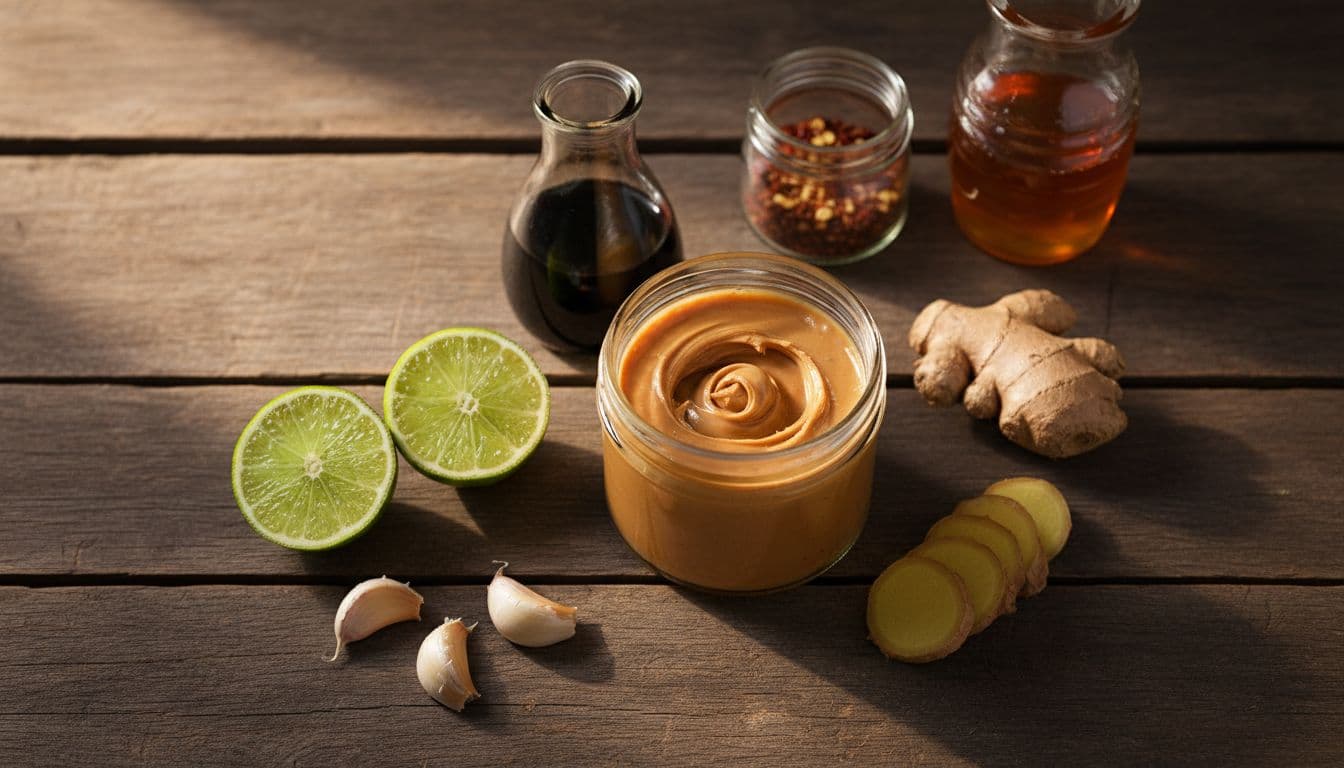
For one batch, I use:
- 1/2 cup creamy peanut butter
- 2 tablespoons soy sauce
- 1 tablespoon fresh lime juice
- 1 tablespoon honey
- 1 small garlic clove, finely grated or minced
- 1 teaspoon fresh ginger, finely grated
- 1/2 teaspoon sriracha or chili garlic sauce
- 1/4 cup warm water, plus more as needed
That base recipe is the one I trust most, but I change it often. If I’m making spring rolls for friends, I usually keep it mild. If I’m tossing noodles, I often add more lime and a bit more chili because the noodles soften the flavor.
A few swaps work well, and I use them often:
| Ingredient | Swap I use | What changes |
|---|---|---|
| Creamy peanut butter | Natural peanut butter or crunchy peanut butter | Natural needs a good stir first, crunchy adds texture |
| Soy sauce | Tamari | Same salty depth, and it’s a good gluten-free option |
| Lime juice | Rice vinegar | Slightly softer tang, still bright |
| Honey | Maple syrup or brown sugar | Maple stays smooth, sugar may need extra stirring |
| Sriracha | Red pepper flakes or chili crisp | Flakes give dry heat, chili crisp adds texture |
If I use natural peanut butter, I stir the jar well before measuring. The separated oil can make the sauce uneven if I skip that step. Regular creamy peanut butter gives the smoothest result, so that’s what I reach for when I want a no-stress batch.
Fresh lime tastes best to me, but rice vinegar works when my produce drawer is empty. I also swap tamari for soy sauce when I want a gluten-free sauce or a slightly deeper flavor.
How I make the sauce so it stays smooth
This is the part that surprises people. My peanut sauce recipe doesn’t need a pan. A bowl and whisk do the job.
- I add the peanut butter, soy sauce, lime juice, honey, garlic, ginger, and chili sauce to a medium bowl.
- Then I whisk until the mixture looks thick and a little stiff. That stage is normal.
- Next, I pour in warm water a little at a time, whisking after each splash.
- I stop when the sauce reaches the texture I want.
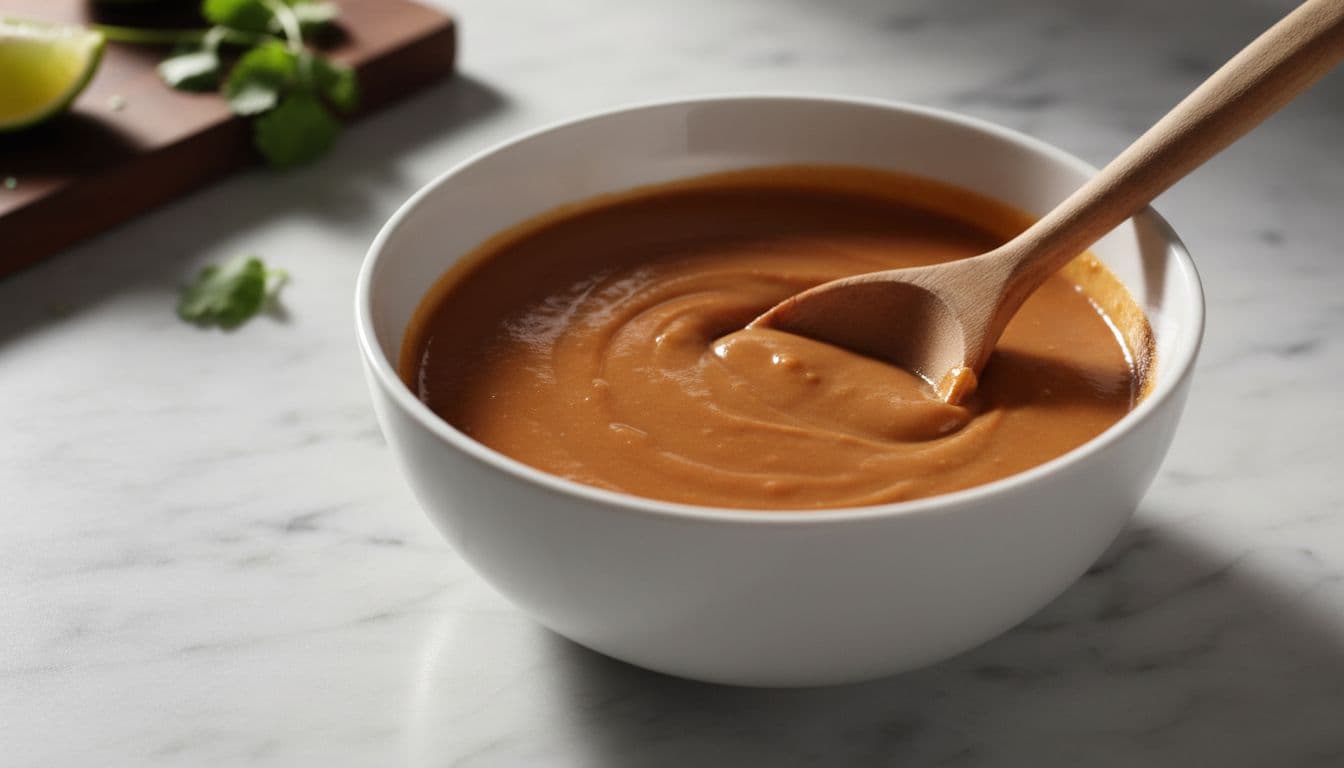
Warm water makes a big difference. Cold water can make the sauce tighten up at first, while warm water helps it relax and turn glossy. If my sauce ever looks clumpy, I keep whisking. Most of the time it smooths out within a minute.
If the sauce feels stubborn, add warm water by the teaspoon, not in one big pour. Small changes are easier to control.
For a thicker dip, I use less water. For noodles, I keep going until the sauce falls from the spoon in a steady ribbon. That sounds simple because it is. The texture matters more than hitting one exact measurement.
Sometimes I use a jar with a lid and shake everything together. That works best when the peanut butter is soft and creamy. If it came straight from the fridge, whisking is easier.
Taste before serving. If it needs more salt, I add a little soy sauce. If it tastes flat, I squeeze in more lime. When I want more heat, I stir in extra chili sauce a few drops at a time.
How I use it for spring rolls and noodles
Once the sauce is made, I choose the texture based on what I’m serving. That small change gives me two totally different results from one bowl.
For dipping spring rolls
With fresh spring rolls, I want the sauce thick enough to cling. It should hold on to the wrapper instead of sliding off and pooling on the plate. So I keep the water on the low side, usually around 3 to 4 tablespoons total.
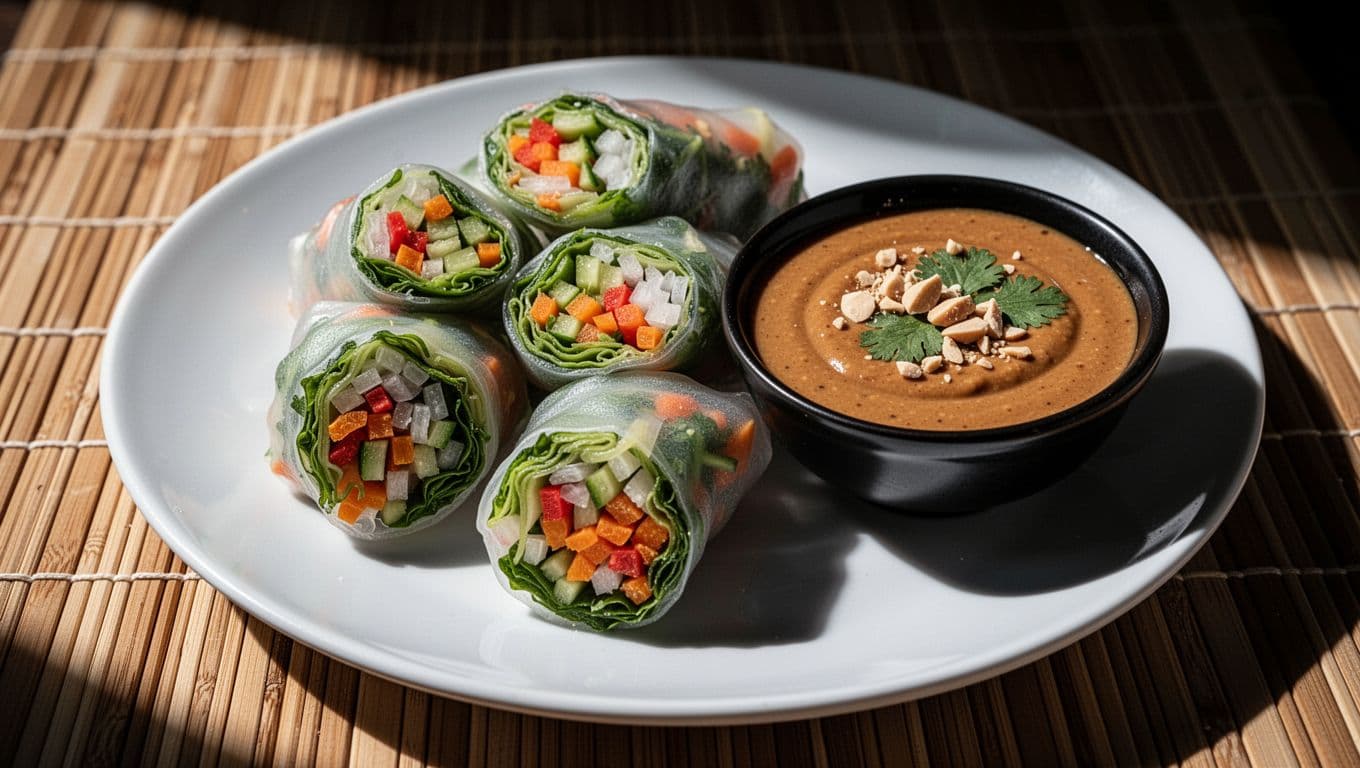
I also like to finish the dipping version with chopped peanuts or a tiny spoonful of chili crisp. That extra texture makes each bite more fun, especially when the spring rolls are packed with soft noodles, lettuce, and herbs.
If I’m serving a platter for guests, I make the sauce a little ahead so the flavors can settle. Then I stir it once before setting it out. Peanut sauce thickens as it sits, so I keep warm water nearby in case it needs loosening.
For coating noodles
Noodles need a looser sauce because they keep absorbing moisture. If I use my dipping version on hot noodles, it grabs too hard and turns sticky. For noodle bowls, I thin the sauce until it pours easily.
For spring rolls, I keep it thick. For noodles, I thin it until it drapes over the pasta.
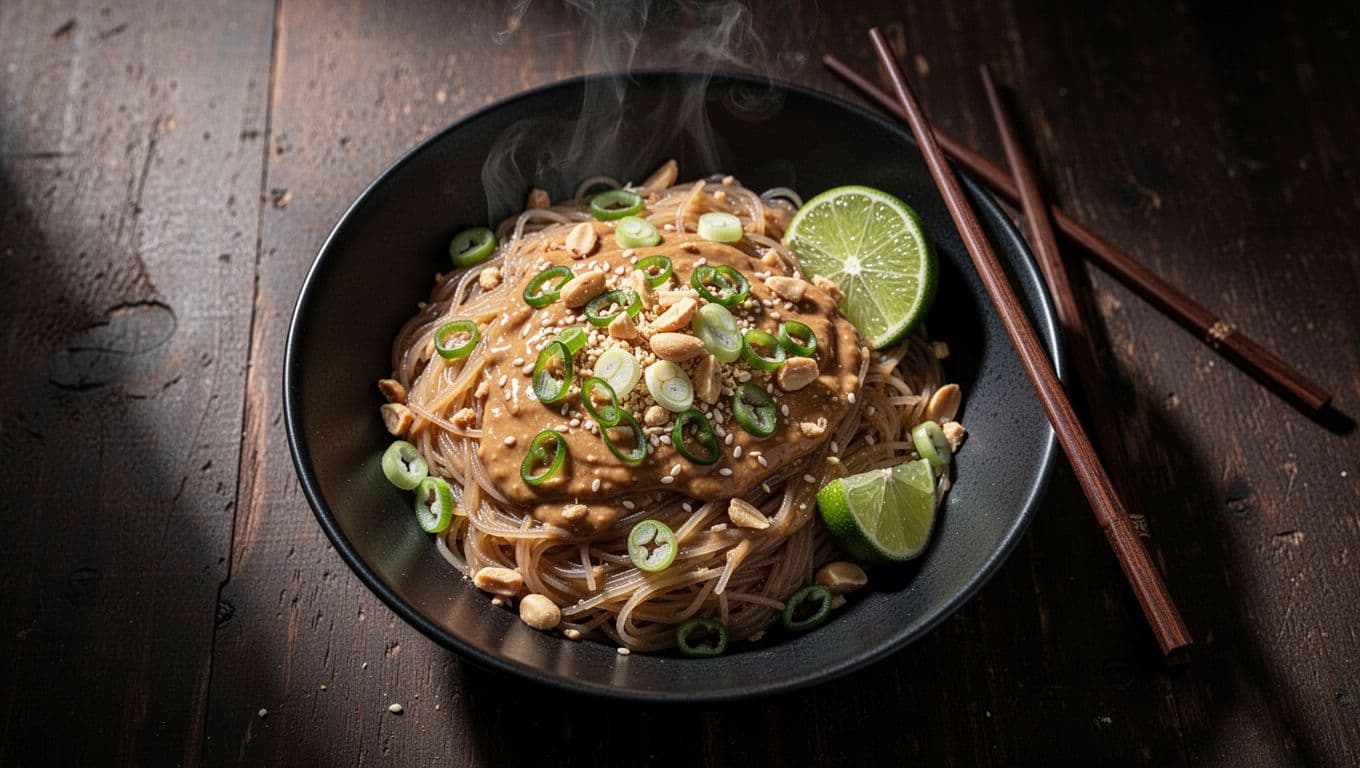
Rice noodles, soba, and spaghetti all work here. I usually toss the hot noodles with a splash of cooking water first, then add the peanut sauce. That helps the sauce coat everything instead of sitting in heavy clumps.
A squeeze of lime at the end wakes the whole bowl up. Green onions, cilantro, sesame seeds, or crushed peanuts also fit well if I have them on hand. Still, the sauce does most of the work. Even plain noodles taste complete once they’re coated.
Storage, make-ahead tips, and quick fixes
I store leftover sauce in a jar or airtight container in the fridge for up to 5 days. It thickens as it chills, so I never judge the texture straight from the fridge.
Before I use it again, I let it sit on the counter for a few minutes and stir in warm water, one teaspoon at a time. That brings it back fast. If the flavor feels muted after a day or two, a small squeeze of lime usually fixes it.
This sauce is great for make-ahead meals. I often mix it the night before if I’m packing spring rolls for lunch or planning noodles for a busy evening. The garlic and ginger mellow a bit overnight, which I like.
If I accidentally make it too salty, I add more peanut butter and warm water. If it’s too sweet, I balance it with lime. When it’s too thick, warm water solves it. When it’s too thin, another spoonful of peanut butter pulls it back.
Conclusion
I keep coming back to this peanut sauce because it saves time without tasting rushed. A few pantry staples, a bowl, and a whisk give me a dip for spring rolls or a sauce that turns noodles into dinner.
Once I learned to adjust the texture with warm water, the recipe got much easier. That’s still my favorite part about it. It bends to what I need, and it does it fast.