
Uncategorized
My Easy Garlic Aioli Recipe for Fries and Sandwiches

Plain fries and basic sandwiches can feel a little flat. I fix that with a small bowl of homemade aioli that takes almost no effort.
I make this quick version as a versatile dipping sauce for french fries and a flavorful sandwich spread for various lunches when I want something creamy, sharp, and a little brighter than plain mayo. It comes together fast, tastes like more than the sum of its parts, and makes an ordinary lunch feel finished.
Key Takeaways
- This 5-minute garlic aioli uses mayonnaise as a quick base for creamy texture and bold flavor, perfect for fries, sandwiches, burgers, and more.
- Finely grate fresh garlic on a microplane for smooth integration; start with 1 clove and adjust to taste, as flavors mellow after chilling.
- Whisk together mayo, grated garlic, lemon juice, Dijon, olive oil, salt, and pepper—no special tools needed, though a food processor works for batches.
- Easy swaps like Greek yogurt for lighter version or roasted garlic for milder taste; stores in fridge up to 4 days and improves with time.
- Elevates everyday meals effortlessly, with fixes like extra mayo for thickness or lemon to balance strong garlic.
The quick garlic aioli recipe I use most
This is the version I make on busy days, because it starts with mayonnaise. I still get creamy texture and bold garlic flavor, but I don’t need extra steps or special tools.
Here are the quick recipe details at a glance:
| Detail | Amount |
|---|---|
| Prep time | 5 minutes |
| Optional chill time | 10 minutes |
| Yield | About 3/4 cup |
| Best uses | French fries, sweet potato fries, sandwiches, burgers, wraps |
For the aioli, I use:
- 3/4 cup mayonnaise (or vegan mayonnaise for a plant-based version)
- 1-2 garlic cloves, finely grated
- 2 teaspoons fresh lemon juice
- 1 teaspoon Dijon mustard
- 1 teaspoon extra virgin olive oil
- 1/4 teaspoon kosher salt
- 1/8 teaspoon black pepper
That amount of garlic mayo gives me enough for a plate of fries and several sandwiches. If I’m serving a crowd, I double it and keep the same method.
Fresh garlic matters here. Jarred garlic can taste harsh and flat, while finely grated fresh garlic melts into the sauce for creamy texture. Lemon juice keeps it from tasting heavy, and Dijon mustard adds a gentle tang that rounds everything out.
If you like a softer garlic flavor, start with half a clove. You can always stir in more after a taste. That small pause saves the whole bowl.
How I make it in 5 minutes
I use a medium bowl and a small whisk, although a fork works too. The only trick is grating the garlic as finely as possible with a microplane grater, so the sauce turns smooth instead of chunky.
- Add the mayonnaise, grated garlic, lemon juice, Dijon, olive oil, salt, and pepper to a bowl.
- Whisk until the mixture looks smooth and creamy, about 30 seconds.
- Taste it, then add a pinch more salt or a few drops of lemon juice if needed.
- Chill it for 10 minutes if you have time, then stir once more before serving.
I always grate the garlic on a microplane grater. The flavor spreads evenly, and I don’t get raw little bites in the sauce.
If the aioli tastes a bit strong right away, don’t panic. Garlic settles in after a few minutes, and the flavor smooths out as it sits. This shortcut uses mayonnaise as a base for speed, while traditional recipes often start with raw eggs or egg yolks and require you to slowly emulsify oil. For larger batches, a food processor or immersion blender can replace the hand whisk.
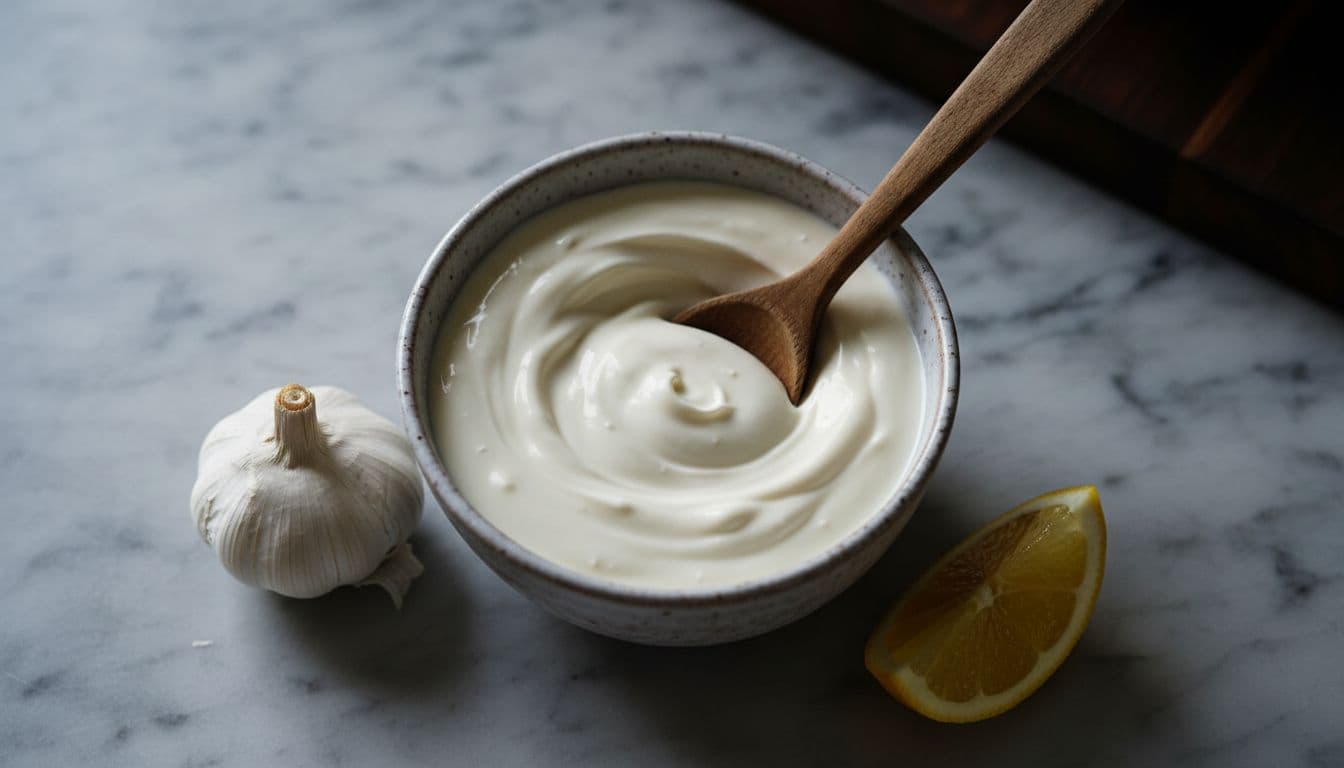
I usually make this first, then cook the fries or build the sandwiches while it chills. That timing works well, because the sauce thickens slightly in the fridge and tastes more balanced by the time I use it.
The ways I serve it, swap it, and fix it
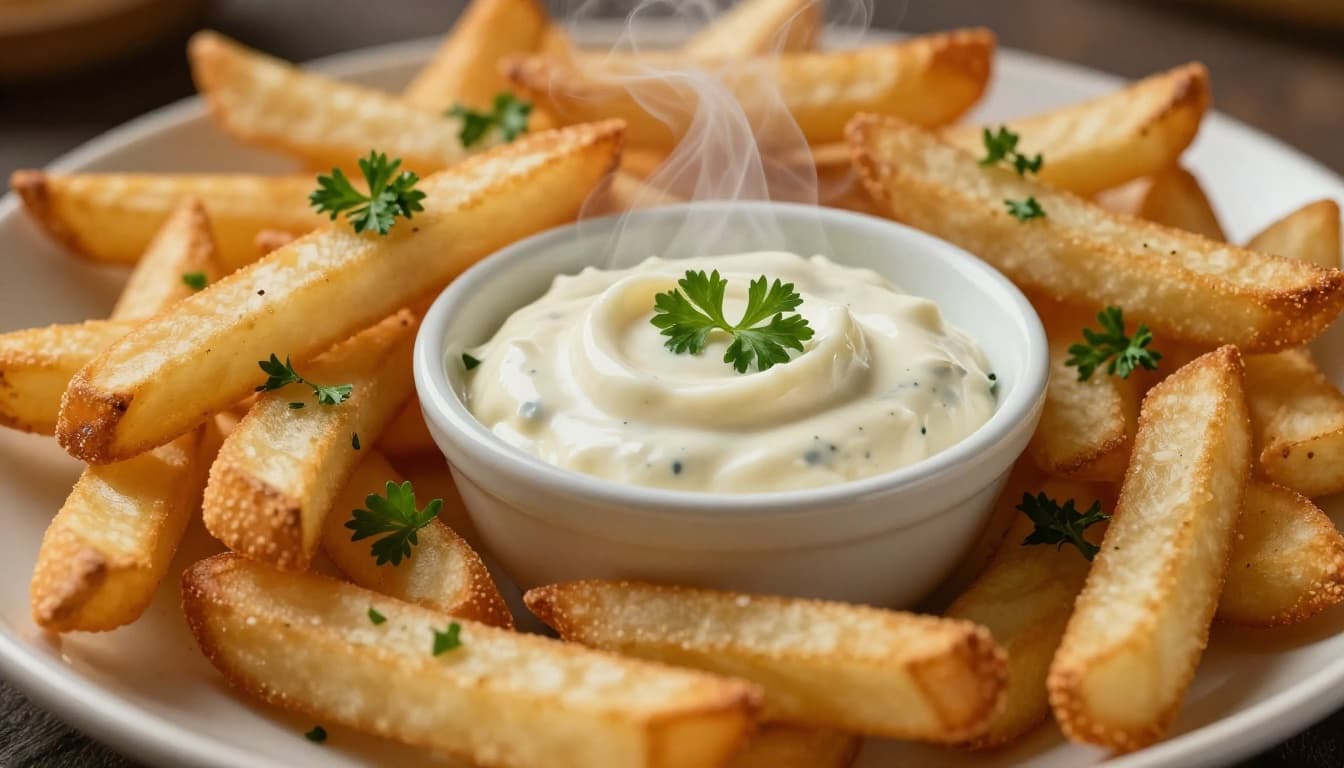
For french fries, I spoon the aioli into a shallow bowl so dipping is easy. A batch of hot, crispy french fries and cold aioli is one of my favorite contrasts, because the sauce stays thick while the french fries stay crisp. For 1 pound of french fries, I use about 1/3 cup of aioli.
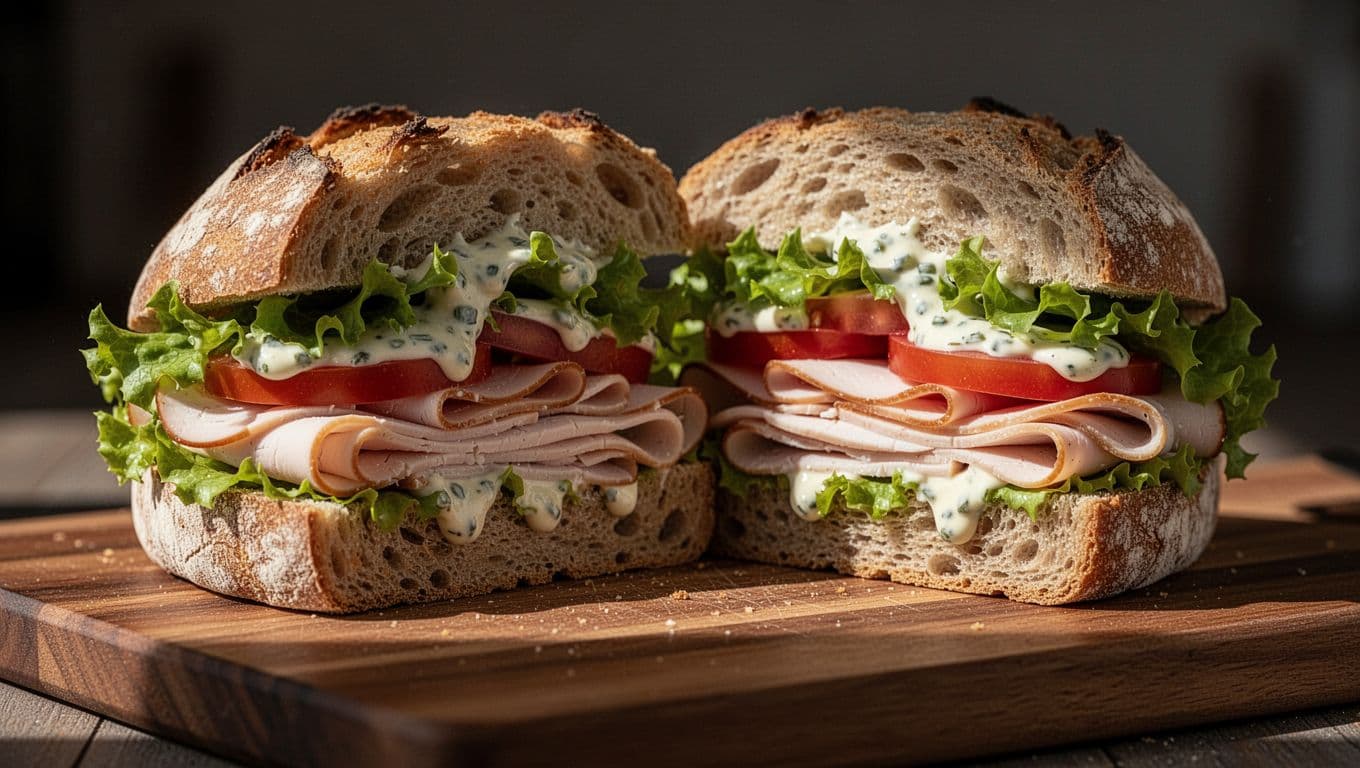
For sandwiches, I spread about 1 tablespoon on each slice of bread, or 2 tablespoons on a hoagie roll. It works especially well with turkey, grilled chicken, burgers, seafood like shrimp or calamari, BLTs, and tomato sandwiches. I also like it with roasted potatoes and roasted vegetables, because it adds richness without feeling too heavy.
Easy swaps I use when I need them
A few simple swaps work well in this garlic aioli recipe:
| If I’m out of… | I use… | What changes |
|---|---|---|
| Lemon juice | 1 teaspoon white wine vinegar | Slightly sharper flavor |
| Dijon mustard | 1/2 teaspoon yellow mustard | Milder, less complex taste |
| Raw garlic | 1 teaspoon mashed roasted garlic | Sweeter, softer garlic flavor |
If I want a lighter version, I replace 1/4 cup of the mayo with plain Greek yogurt. The sauce turns tangier and a bit looser, but it still tastes good on sandwiches.
How I fix aioli that needs help
If the aioli is too thin, I whisk in more mayonnaise, 1 tablespoon at a time. Usually, one extra spoonful is enough. If I added too much lemon, I let it chill for 10 minutes before adjusting again.
If the garlic flavor is too strong, I stir in another tablespoon or two of mayonnaise. A small squeeze of lemon also helps soften the raw edge. Next time, I use a smaller clove or swap in roasted garlic.
How I store leftovers
I keep leftover aioli in an airtight container in the fridge for up to 4 days. Before using it again on french fries or sandwiches, I stir it well, because it can loosen slightly as it sits. I don’t freeze it, since the texture can split and turn watery.
Frequently Asked Questions
Can I make a vegan version of this garlic aioli?
Yes, just swap in vegan mayonnaise, which works perfectly for the same creamy results. All other ingredients like lemon juice, Dijon (use a vegan brand if needed), olive oil, salt, and pepper stay the same. It tastes just as bold and versatile for fries or sandwiches.
How can I tone down the garlic flavor if it’s too strong?
Start with half a clove of grated fresh garlic and taste before adding more, or swap in roasted garlic for a sweeter, softer profile. Stir in an extra tablespoon of mayonnaise or a squeeze of lemon to mellow the raw edge. Let it chill for 10 minutes, as the flavors balance out over time.
What’s the best way to store leftover aioli?
Keep it in an airtight container in the fridge for up to 4 days. Stir well before using, since it can loosen slightly as it sits. Don’t freeze it, as the texture may split and become watery.
Can I use substitutions for lemon juice or Dijon mustard?
Use white wine vinegar instead of lemon juice for a sharper tang, or yellow mustard in place of Dijon for a milder taste. Both keep the aioli creamy and flavorful without much change to the method. For a lighter option, replace some mayo with plain Greek yogurt.
How much aioli do I need for fries or sandwiches?
About 1/3 cup serves a pound of french fries for easy dipping, keeping them crisp. Use 1 tablespoon per bread slice or 2 tablespoons on a hoagie roll for sandwiches. Double the recipe for crowds, as it scales easily.
The aioli I keep coming back to
A small bowl of homemade aioli can do a lot of work. It wakes up fries, gives sandwiches more flavor, and turns a simple lunch into something I want to sit down and enjoy.
I keep coming back to this garlic aioli recipe because it’s quick, reliable, and easy to adjust. The garlic flavor even improves over time in the fridge, making my homemade aioli that much better. Once I have this garlic aioli recipe ready, the rest of the meal feels much easier, and this simple garlic mayo elevates everyday meals effortlessly.