
Uncategorized
My Easy Romesco Sauce for Chicken and Vegetables

I love a sauce that makes dinner feel thoughtful without asking for much effort. This easy romesco sauce does that for me every time.
It starts with jarred roasted red peppers, almonds, garlic, and smoked paprika. Then it turns into a bold, smoky sauce that loves chicken and roasted vegetables. If your weeknight meals need a reset, this is the kind of recipe that helps.
What I put in my easy romesco sauce
I keep the ingredient list short because I want this sauce to be simple enough for a busy night. The flavor still tastes layered and rich, which is why I keep coming back to it.
Here’s what I use most often:
- Roasted red peppers, jarred peppers save time and still give the sauce that sweet, smoky base.
- Toasted almonds, they add body and a little natural richness.
- Garlic, one or two cloves are enough for a sharp, fresh kick.
- Tomato paste, just a spoonful deepens the color and gives the sauce more depth.
- Smoked paprika, this is what gives romesco its warm, smoky edge.
- Sherry vinegar, it brightens the sauce and keeps it from tasting heavy.
- Olive oil, I use it to smooth everything out.
- Salt and black pepper, these pull the whole sauce together.
If I want a thicker sauce, I add a small handful of breadcrumbs. If I want it looser, I leave them out. That one choice changes the texture without changing the character of the sauce.
I always taste the sauce before I serve it. A splash of vinegar or a pinch of salt can wake it up fast.
How I make romesco sauce for chicken and vegetables
I like recipes that don’t fight me on a Tuesday night. This one is easy enough to make while the oven heats up or the chicken cooks.
- I add the roasted red peppers, almonds, garlic, tomato paste, smoked paprika, vinegar, salt, and pepper to a food processor or blender.
- I blend until the mixture looks coarse and mostly combined.
- Next, I stream in the olive oil and blend again until the sauce feels smooth but still has a little texture.
- I taste it and adjust. More vinegar gives it brightness. More oil softens the edges. A small splash of water helps if it feels too thick.
- Finally, I spoon it over hot chicken and vegetables, or I serve it on the side.
I don’t make the sauce perfectly smooth. I like a little texture because it feels more homemade. Still, I also want it to spread easily and coat the food well.
If I’m serving it with roasted chicken, I make the sauce while the chicken rests. That timing works beautifully. The sauce comes together quickly, and the chicken stays juicy.
The best chicken and vegetables for romesco
This sauce has a lot of personality, so I pair it with foods that can hold their own. Roasted chicken thighs are my favorite because they stay tender and pick up the sauce well. Chicken breasts work too, especially if I slice them before serving.
Grilled chicken cutlets and skewers are also great. Their char plays well with the smoky flavor in the sauce. If I’m using leftover chicken, I warm it gently and spoon romesco over the top.
For vegetables, I reach for anything that caramelizes well in the oven. Broccoli, cauliflower, zucchini, bell peppers, carrots, asparagus, mushrooms, and baby potatoes all work. I also like sheet-pan dinners with mixed vegetables because the sauce ties everything together.
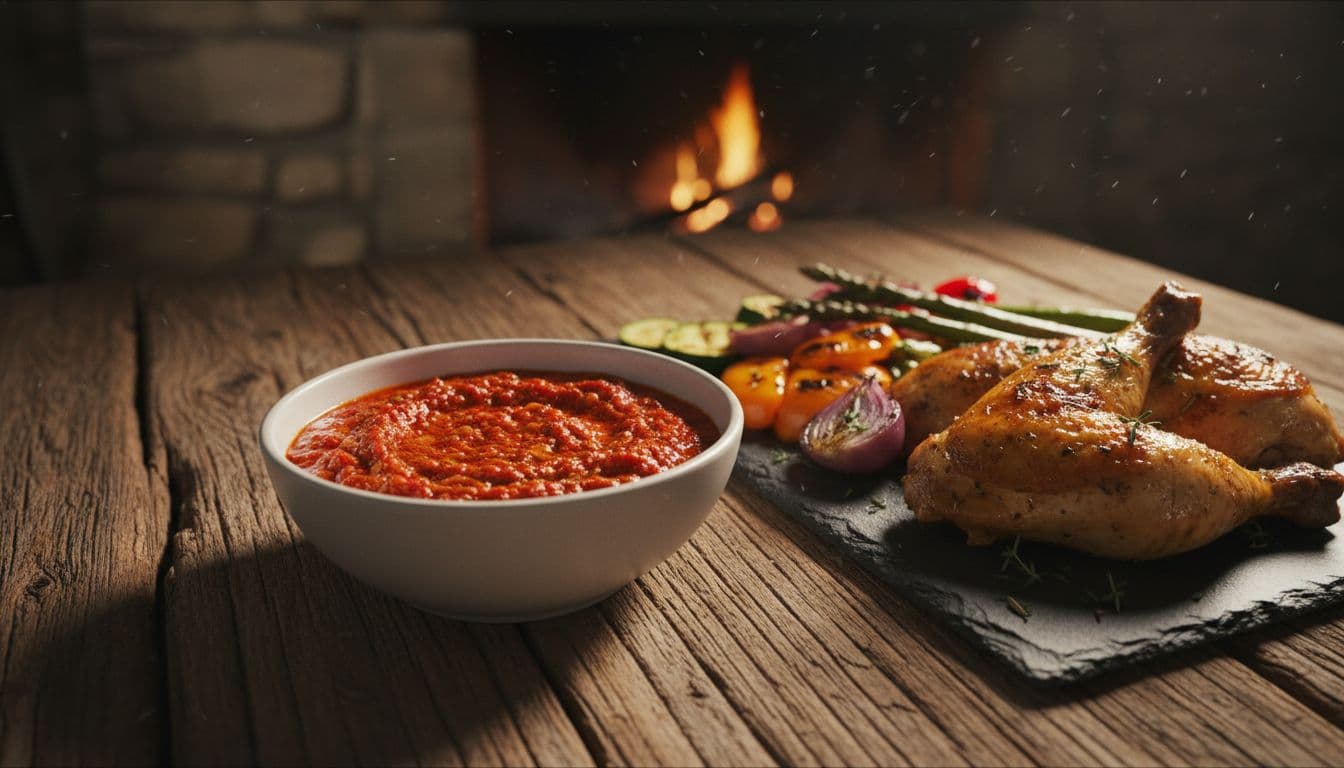
The sauce loves browned edges. In other words, the more color your chicken and vegetables have, the better the final plate tastes.
How I keep the texture and flavor balanced
Romesco should feel balanced, not flat or muddy. That balance comes from paying attention to texture, acidity, and salt.
If the sauce feels too thick, I loosen it with a little warm water or extra olive oil. If it feels too thin, I add a few more almonds or a spoonful of breadcrumbs. A short blend usually fixes the problem.
Flavor works the same way. Too sharp? I add more olive oil or another roasted pepper. Too mild? I add a pinch more salt or a small splash of vinegar. Smoked paprika should stay present, but it shouldn’t overpower the rest of the sauce.
I also like to use the sauce after it sits for a few minutes. The flavors settle and blend together. That short rest makes a difference, especially if I made it while the chicken was still cooking.
A few easy fixes help me every time:
- Too chunky: Blend a little longer.
- Too thick: Add warm water one tablespoon at a time.
- Too sharp: Add olive oil or more roasted pepper.
- Too flat: Add salt, vinegar, or a touch more paprika.
Serving ideas and storage tips
I serve this sauce in a few different ways, depending on the night. Sometimes I spoon it over sliced chicken and roasted broccoli. Other times I spread it across a platter and place the vegetables right on top.
It also works well as a side sauce for family-style dinners. That way, everyone can add as much as they want. I like that approach because it keeps the meal flexible.
For a simple plate, I build a base of roasted vegetables, add chicken on top, then finish with a generous spoonful of romesco. A little parsley on top looks nice, but I don’t think the sauce needs much else.
This sauce stores well, which makes it even more useful. I keep it in an airtight container in the fridge for up to 5 days. The oil may separate a little, so I stir it before serving.
If I make a bigger batch, I freeze it in small containers. That way I can thaw just what I need for one dinner. When I use it later, I let it come to room temperature or warm it gently. A quick stir brings it back together.
Conclusion
When I want chicken and vegetables to feel special without a lot of work, I make this easy romesco sauce. It uses simple ingredients, but the final flavor tastes bold, smoky, and bright.
That’s why I keep it in my weeknight rotation. It turns basic ingredients into a dinner that feels complete, and it does it without making the kitchen more complicated.
FAQ
Can I make romesco sauce without nuts?
Yes, I can. When I need a nut-free version, I use toasted sunflower seeds. The flavor changes a bit, but the sauce still tastes rich and satisfying.
Can I use a blender instead of a food processor?
Absolutely. I use whichever tool I already have out. A blender gives me a smoother sauce, while a food processor usually leaves a little more texture.
Should I serve romesco sauce warm or cold?
I like it at room temperature or gently warmed. Straight from the fridge works too, but the flavor opens up more after it sits out for a few minutes.