
Uncategorized
My Easy Peri Peri Sauce for Chicken, Fries, and More

A good sauce can rescue a plain dinner, and this one does it fast. When I want bold flavor without a long prep, I make a batch of peri peri sauce (also known as piri piri sauce), the spicy African sauce, and keep it close.
Bottled versions like Nando’s can be fine, but I like the fresher taste of homemade peri peri sauce. With its South African and Portuguese origins, mine is smoky, tangy, garlicky, and easy to tweak, so it works as a marinade, basting sauce, dip, or drizzle.
The best part is how little effort it takes, and that starts with the ingredients.
Key Takeaways
- My homemade peri peri sauce blends up in about 15 minutes with a quick simmer, packing smoky, tangy, garlicky heat from chilies, bell peppers, garlic, and smoked paprika.
- African Bird’s Eye chilies (or Thai red, Fresno) deliver authentic spice, balanced by red bell peppers for color and milder body, plus oil and acid for marinating or dipping.
- Use it as a marinade (1/2 cup for 2 lbs chicken, 30+ minutes), basting sauce, fry dip, or drizzle on leftovers, saving some clean sauce for serving.
- Tweak easily: more lemon for brightness, oil for smoothness, honey to tame heat, or simmer longer for mellow garlic.
- Fridge it airtight for 1 week (stir to loosen), or freeze portions for longer storage.
What I Put in My Peri Peri Sauce
A homemade peri peri sauce should taste hot, bright, garlicky, and a little smoky. I also want enough body for dipping, enough acid for marinating, and enough oil to cling to chicken.
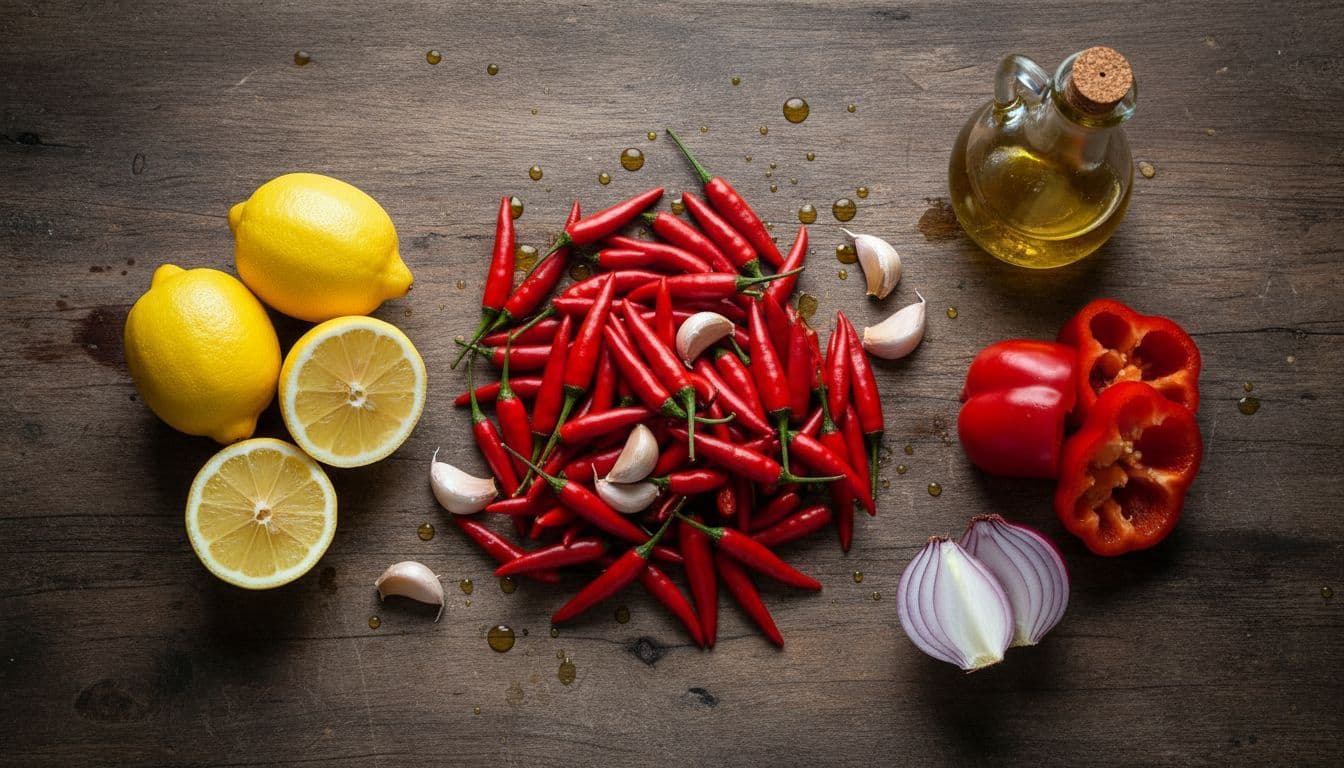
This is the mix I use for about 1 1/4 cups of sauce:
- 6 chili peppers (African Bird’s Eye chilies, bird’s eye peppers, or Thai red chilis), seeded for less heat
- 1-2 red bell peppers, chopped
- 4 garlic cloves
- 1/2 small red onion, chopped
- 1/3 cup olive oil
- 3 tablespoons lemon juice
- 2 tablespoons red wine vinegar
- 2 teaspoons smoked paprika
- 1 teaspoon dried oregano
- 1 teaspoon kosher salt
- 1 teaspoon sugar or honey
If I can find African Bird’s Eye chilies or bird’s eye peppers, I use some for authentic heat. Thai red chilis work great too, or Fresno and serrano peppers if those are easier to find. The red bell peppers matter because they soften the heat and give the sauce that deep red color. Smoked paprika adds that grilled note fast, even if I never touch the grill. For extra depth, try tossing in a bay leaf while blending or some fresh cilantro for a herbal lift.
I rarely add more than a teaspoon of sugar, because I want the chili peppers to stay front and center. Still, that small touch helps the tang sit better with the garlic cloves. Without it, the sauce can taste sharp instead of lively.
If red wine vinegar is not in the pantry, white vinegar or apple cider vinegar works. Lime juice can stand in for lemon juice. I also swap in jarred roasted red bell peppers when I want a sweeter, softer sauce. That version is great when I’m cooking for people who like flavor more than heat.
How I Make It in About 15 Minutes
My method is easy enough for a weeknight. I rough-chop everything, then blend it smooth in a blender or food processor for the right texture before simmering it briefly. That short cook mellows the onion and garlic, and it gives the sauce a fuller taste.
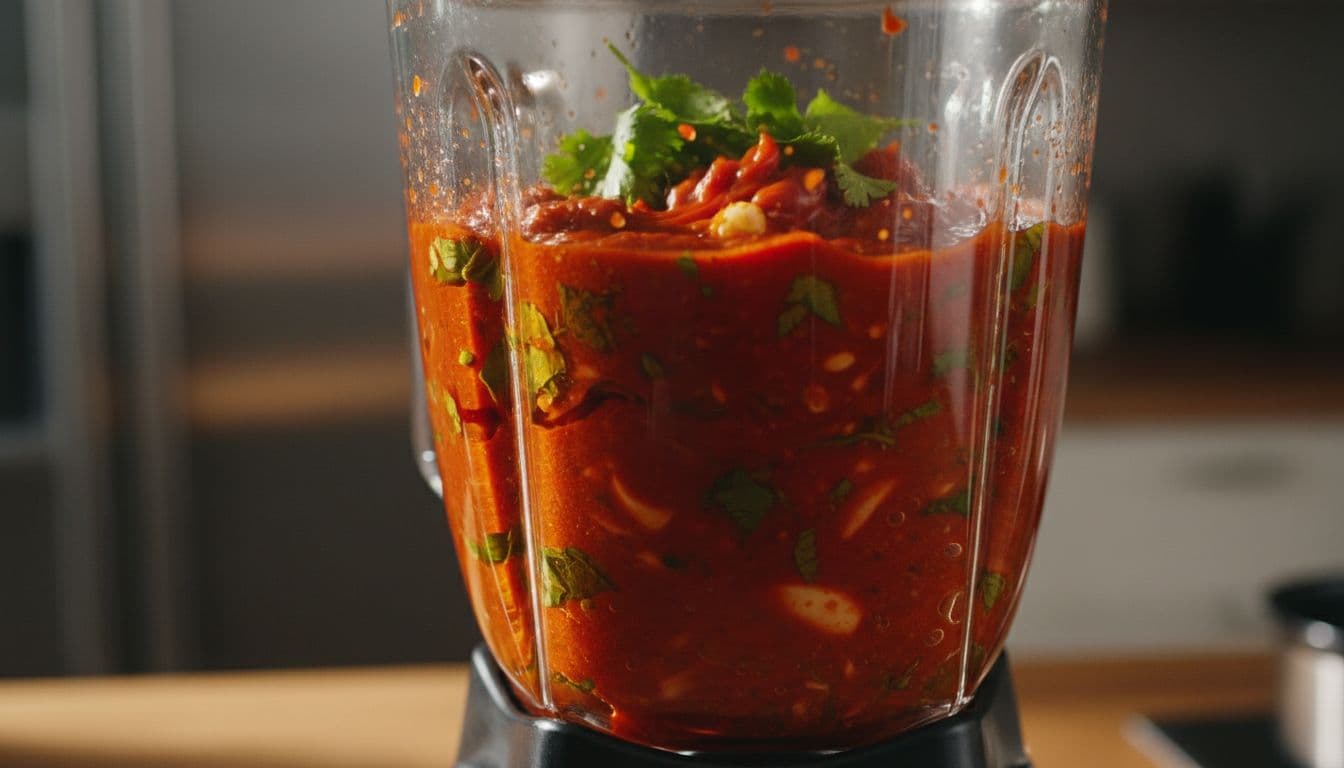
- Cut the stems from the chilies. Remove most of the seeds if you want milder heat.
- Add the chilies, bell pepper, onion, garlic, olive oil, lemon juice, vinegar, paprika, oregano, salt, and sugar to a blender or food processor. Blend until the sauce looks smooth and bright red.
- Pour it into a small saucepan. Simmer over medium-low heat for 5 to 8 minutes, stirring now and then.
- Taste and adjust. Add more lemon juice for brightness, more oil for a softer finish, or more smoked paprika for a deeper smoky note.
- Let it cool a little, then use it right away or pour it into a clean jar.
I balance this sauce in small moves. If the heat from the chili peppers is strong, I add a little more bell pepper, oil, or honey. If it tastes flat, a pinch more salt usually fixes it. When the tang gets too loud, I add a spoonful of roasted pepper or a small splash of oil before I add more sweetener.
I always save some sauce before it touches raw chicken, then use that clean portion for basting or dipping.
For peri peri chicken, I use about 1/2 cup of sauce for 2 pounds of grilled chicken thighs, drumsticks, or wings. I marinate for at least 30 minutes, although a few hours gives the sauce more time to soak in. Then I brush on more near the end of cooking so the outside stays glossy and bold.
How I Use It for Chicken and Fries
This is where my easy peri peri sauce earns a permanent spot in the fridge for peri peri chicken, fries, and more spicy food. I use it as a marinade, a baste, a dip, and a drizzle, and each version feels a little different.
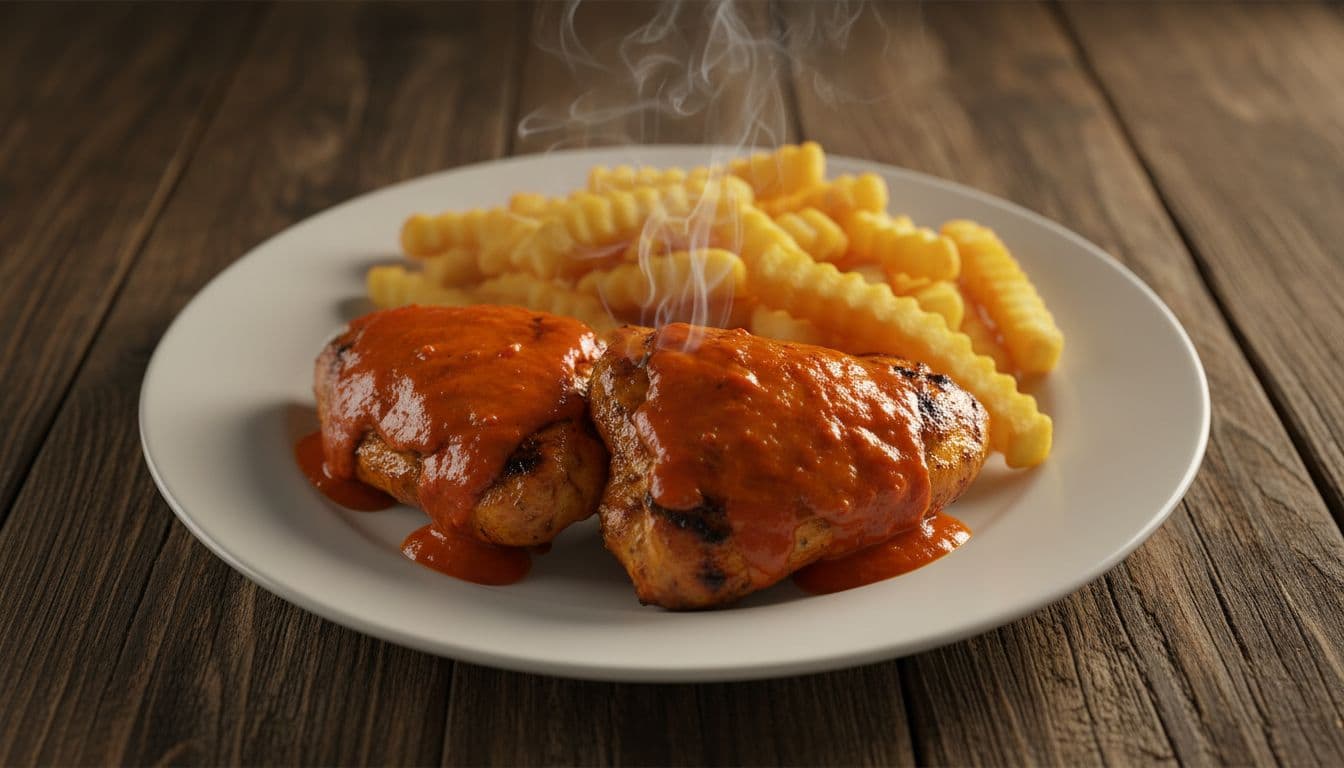
On chicken, I love it for peri peri chicken with grilled chicken thighs, oven-roasted drumsticks, air-fryer wings, or even a quick skillet breast. The sauce has enough acid to cut through rich meat, yet enough oil to keep the bite smooth. On fries, I drizzle a little over the top and serve more on the side as a dipping sauce. If I want a creamier dip, I stir a spoonful into mayo or plain Greek yogurt.
This sauce also wakes up leftover roast chicken. I spoon it over a chicken sandwich, toss it with crispy potato wedges, or add a little to a rice bowl. A small amount goes a long way, so I start light and add more at the table.
I store leftover sauce in an airtight container in the fridge and use it within 1 week. It may thicken or separate as it chills, so I give it a good stir before serving. For longer storage, I freeze it in small portions and thaw what I need.
A few easy fixes help if the flavor slips off. When the sauce is too spicy from the African Bird’s Eye chilies, I blend in more bell pepper or add a spoon of honey. If it turns too thick, I loosen it with warm water, lemon juice, or a splash of vinegar or olive oil. When it tastes too tangy, I add a little oil and a pinch of sugar. If raw garlic bites too hard, I simmer it a few minutes longer.
Frequently Asked Questions
What chilies work best in peri peri sauce?
I go for African Bird’s Eye chilies or bird’s eye peppers for authentic heat, but Thai red chilies, Fresno, or serrano peppers are great substitutes. Seed most of them to dial back the spice. Red bell peppers are key to soften the heat and give that deep red color.
How can I make the sauce milder?
Remove more seeds from the chilies and add extra red bell pepper or jarred roasted ones for sweetness. Stir in more olive oil or a touch of honey to balance. For a creamy dip, blend in mayo or Greek yogurt.
What’s the best way to use it on chicken?
Marinate 2 pounds of thighs, drumsticks, or wings in 1/2 cup sauce for at least 30 minutes (a few hours is better). Baste near the end of grilling, roasting, or air-frying. Always save some unused sauce for dipping or drizzling.
How do I store homemade peri peri sauce?
Pour into an airtight jar and keep in the fridge for up to 1 week; give it a stir as it may thicken or separate. For longer use, freeze in small portions and thaw what you need. It holds flavor well either way.
What can I substitute in the recipe?
Lime juice works for lemon, and white or apple cider vinegar swaps for red wine vinegar. Jarred roasted red peppers make a sweeter sauce. Smoked paprika is non-negotiable for that grilled smokiness without the grill.
Final Thoughts
I keep coming back to this recipe because it’s easy, bold, and useful in more than one way. A blender, a few peppers, and some pantry basics turn into a homemade peri peri sauce that makes chicken and fries taste far better than their effort level.
Once I have a jar of this peri peri sauce in the fridge, dinner feels simpler. The chicken has more punch, the fries stop being plain, and leftovers taste like I planned them that way.