
Uncategorized
My Easy Chimichurri Sauce for Steak and Potatoes

When steak and potatoes need help, I don’t reach for a heavy sauce. I make chimichurri, because it wakes up the whole plate in minutes.
This is the sauce I use when dinner feels a little flat and I want something fresh, fast, and low-stress. My version is beginner-friendly, full of herbs, and easy to adjust if I want more heat or more tang.
Why This Chimichurri Sauce Recipe Is So Easy
I keep this chimichurri sauce recipe simple on purpose. There are no hard steps, no special skills, and no long rest time. I chop, blend, taste, and spoon it over steak and potatoes while everything is still warm.
Here is the quick snapshot I use when I make it.
| Prep time | Total time | Yield | Best with |
|---|---|---|---|
| 10 minutes | 10 minutes | About 1 cup | Steak, roasted potatoes, grilled vegetables |
What I love most is the balance. The herbs taste bright, the garlic gives it punch, and the vinegar cuts through rich food. Because the sauce is cold and fresh, it makes steak feel lighter and potatoes taste less plain. If you’re new to homemade sauces, this is a great place to start.
Ingredients I Use for Fresh Chimichurri
I like a mix of parsley and cilantro because it tastes clean and lively. Parsley keeps it classic, while cilantro softens the sharp edges and adds a little extra freshness.
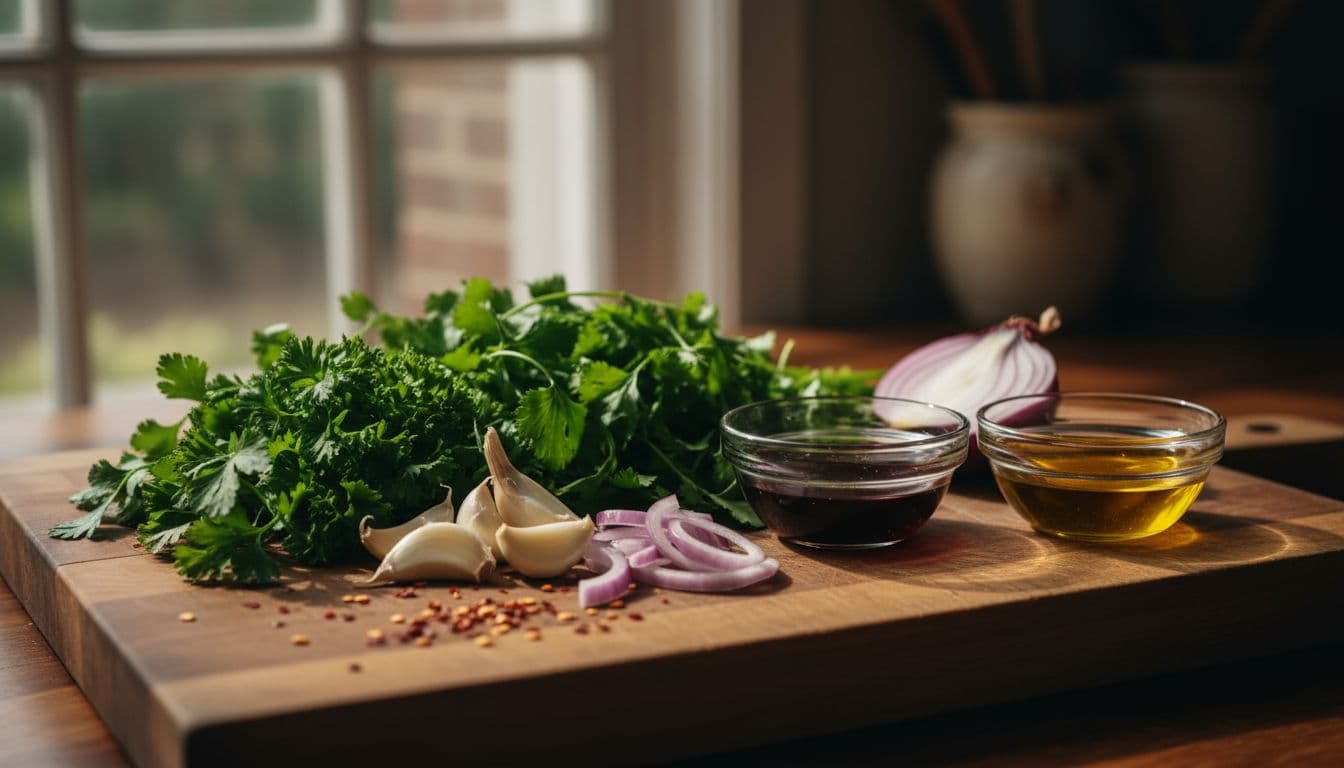
For one batch, I use:
- 1 cup packed fresh flat-leaf parsley leaves
- 1/2 cup packed fresh cilantro leaves
- 3 garlic cloves, peeled
- 1/4 cup finely diced red onion
- 2 tablespoons red wine vinegar
- 1/2 cup olive oil
- 1/2 teaspoon dried oregano
- 1/2 teaspoon kosher salt
- 1/4 teaspoon black pepper
- 1/4 teaspoon red pepper flakes
That short list does a lot. The parsley is the base, so I don’t swap that out unless I have to. The red onion gives the sauce bite without making it too harsh. Red wine vinegar keeps the flavor bright, and olive oil pulls everything together into a spoonable sauce.
I also keep the salt modest at first. Steak and potatoes usually bring their own salt, so I prefer to taste the sauce after blending and adjust then. If I want more zip, I add another teaspoon of vinegar. If I want it milder, I add a small splash of oil.
How I Make It in 10 Minutes
I usually use a food processor because it’s fast and tidy. If I don’t want to wash another appliance, I chop everything by hand and stir it in a bowl. Both ways work.
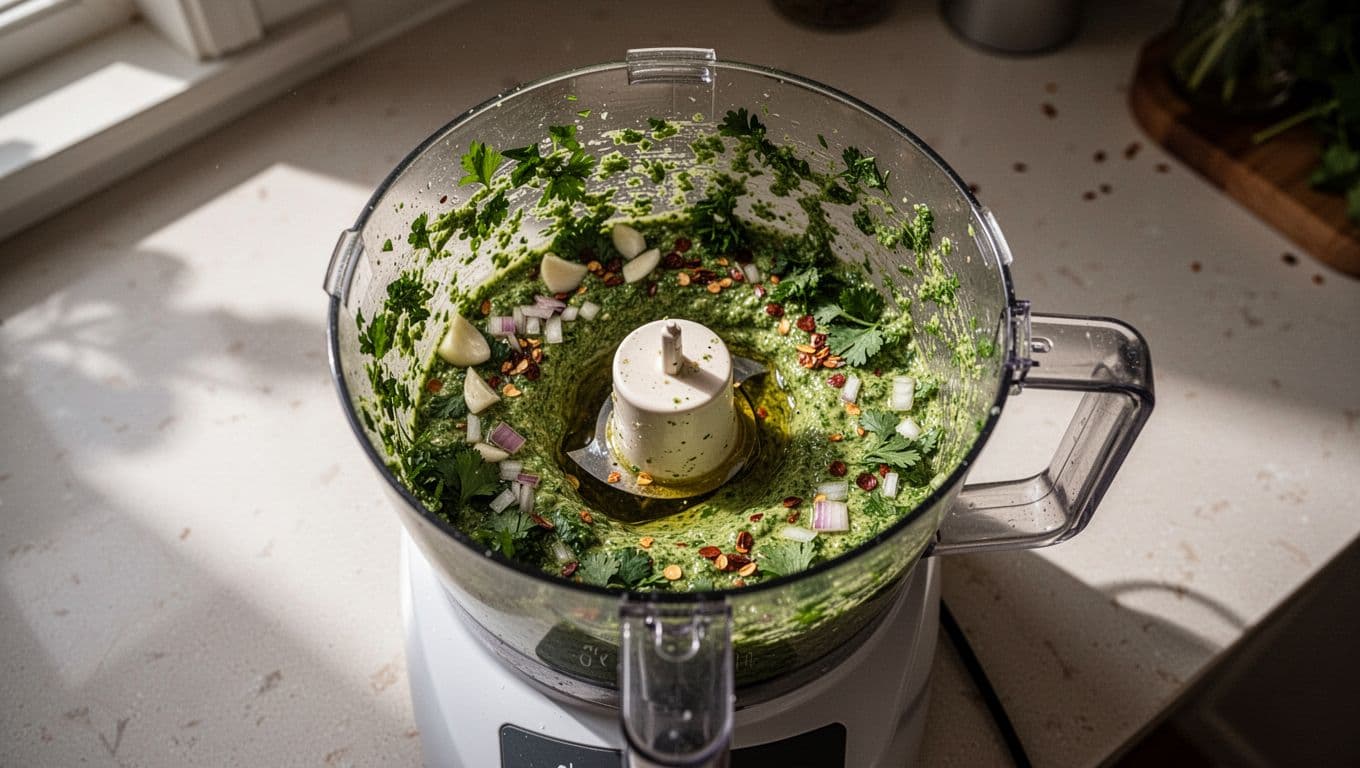
- First, I wash and dry the herbs well. Wet herbs can water down the sauce, so I pat them dry before chopping.
- Next, I add the parsley, cilantro, garlic, red onion, vinegar, oregano, salt, black pepper, and red pepper flakes to the food processor. Then I pulse a few times until everything looks finely chopped.
- After that, I pour in the olive oil. I pulse again in short bursts until the sauce looks mixed but still textured.
- Then I taste it with a piece of potato or bread. If it needs more brightness, I add a little more vinegar. If it tastes too sharp, I add a spoonful of oil.
- Finally, I spoon it into a bowl and use it right away, or I let it sit for 5 to 10 minutes so the flavors settle.
I stop blending while the herbs still have texture. That keeps the sauce fresh instead of turning it into green paste.
If I’m making it by hand, I chop the herbs and onion finely, grate or mince the garlic, and stir everything together. The hand-cut version is a little chunkier, and I like that on grilled steak.
Flavor Notes, Easy Swaps, and Storage
What it tastes like
This sauce is bright first, then garlicky, then gently warm from the pepper flakes. The oil smooths it out, so it doesn’t taste harsh. Because the herbs stay a little rough, each bite has more character than a fully blended sauce.
I also like how flexible it is. On steak, it tastes bold and savory. On potatoes, it turns earthy flavors into something fresher and more lively. That contrast is the whole point.
Simple substitutions I use
If I don’t have cilantro, I use all parsley. The sauce still tastes great, and it leans more classic. When red onion is too strong for my mood, I swap in 2 tablespoons of shallot.
I stick with red wine vinegar most often, but white wine vinegar works too. In a pinch, I use fresh lemon juice, though it gives the sauce a slightly lighter taste. For less heat, I cut the pepper flakes in half. For more heat, I add another pinch after tasting.
How I store leftovers
I keep leftover chimichurri in a jar or small airtight container in the fridge. I use it within 4 days, because the color and flavor are best early on. The oil may firm up a bit when cold, so I set it on the counter for 10 to 15 minutes before serving.
I also press a piece of plastic wrap or parchment against the surface if I want to slow browning. That helps the herbs stay greener. I don’t usually freeze it, because fresh herb sauces lose some sparkle after thawing.
How I Serve It with Steak and Potatoes
I make this sauce most often for grilled or pan-seared steak and crispy potatoes. The rich meat and the fresh herbs belong together, and the sauce ties the whole plate into one meal.
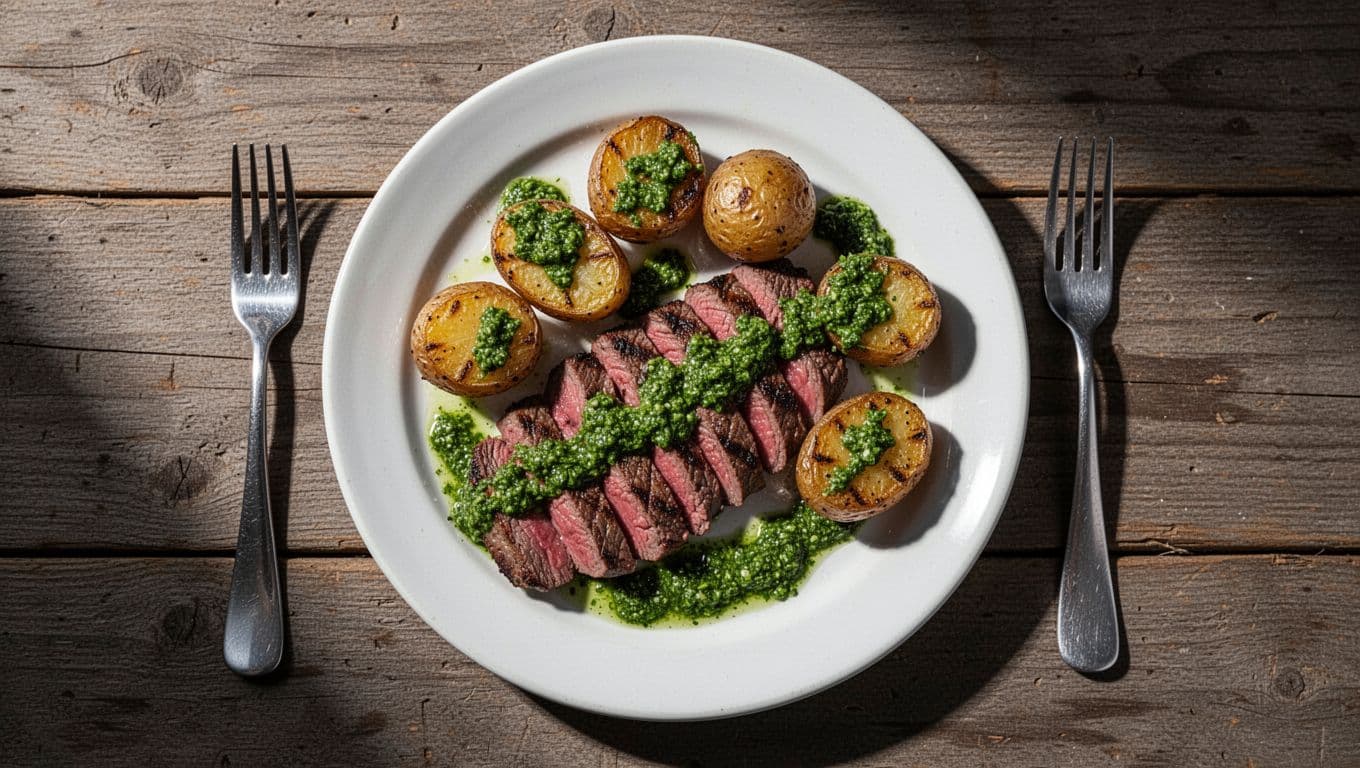
For steak, I spoon the chimichurri over sliced meat after it rests. I don’t put it on while the steak cooks, because fresh herbs lose their bright taste over direct heat. Skirt steak, flank steak, sirloin, and ribeye all work well. If the steak is rich, I add a generous spoonful. If it’s leaner, I serve extra on the side.
With potatoes, I like roasted baby potatoes, crispy wedges, or smashed potatoes. I either drizzle the sauce over the top or toss the warm potatoes with a spoonful before serving. Warm potatoes soak up some of the oil and vinegar, which makes every bite taste seasoned instead of plain.
When I want an easy dinner plate, I do this: sliced steak, roasted potatoes, a spoonful of chimichurri on both, and a simple green salad on the side. It feels special without being fussy.
The Sauce I Make on Repeat
When I want steak and potatoes to taste fresher, this is the sauce I make. It’s quick, it uses simple ingredients, and it gives dinner a lot more life for very little work.
The main trick is keeping the texture loose and tasting before you serve. Once I started making chimichurri at home, bottled steak sauces stopped feeling necessary.
FAQ
Can I make this without a food processor?
Yes, I do that often. I chop the herbs and onion very finely, mince the garlic, and stir everything together in a bowl. It takes a few extra minutes, but the result is great.
Can I use only parsley?
Yes. If cilantro isn’t your thing, use 1 1/2 cups of parsley total. The sauce will taste a little more classic and a bit less soft around the edges.
How spicy is this version?
Mine is mildly spicy. The 1/4 teaspoon of red pepper flakes gives a gentle kick, not a hot one. If I serve it to kids or spice-sensitive guests, I reduce it to a pinch.
Can I make it ahead of time?
Yes, and I often do. I make it a few hours early and keep it chilled, then let it sit at room temperature for a short time before serving. The flavor gets even better after it rests.