
Uncategorized
My Easy Tzatziki Sauce Recipe for Gyros, Bowls, and Pita

A gyro or grain bowl can be good on its own, but a cold spoonful of homemade tzatziki sauce makes it feel finished. My easy tzatziki sauce recipe is fresh, creamy, and quick enough for a weeknight.
I keep this refreshing dip in the fridge for gyros, wraps, pita bread, grilled chicken, and roasted vegetables. The one step that matters most is getting the cucumber dry, and once you do that, the rest comes together fast.
Key Takeaways
- Drain the cucumber well: Grate it, squeeze out excess water in a towel, and keep it almost dry to prevent watery sauce and ensure a thick, scoopable texture.
- Start with full-fat Greek yogurt: It gives the sauce body, better flavor, and creaminess—strain regular yogurt if that’s all you have.
- Mix the base first, then add cucumber: Stir yogurt, garlic, lemon, herbs, oil, and salt together to taste the tang early, fold in cucumber, and chill 15-30 minutes for balanced flavors.
- Versatile and easy: Use on gyros, grain bowls, wraps, grilled meats, or veggies; stores up to 4 days and tastes better on day two.
The simple ingredients behind my creamy tzatziki
I built this authentic Greek tzatziki around simple ingredients I can grab any week for a Mediterranean meal, and it still tastes like something special. It makes about 1 1/2 cups, which is enough for dinner plus a few leftovers.
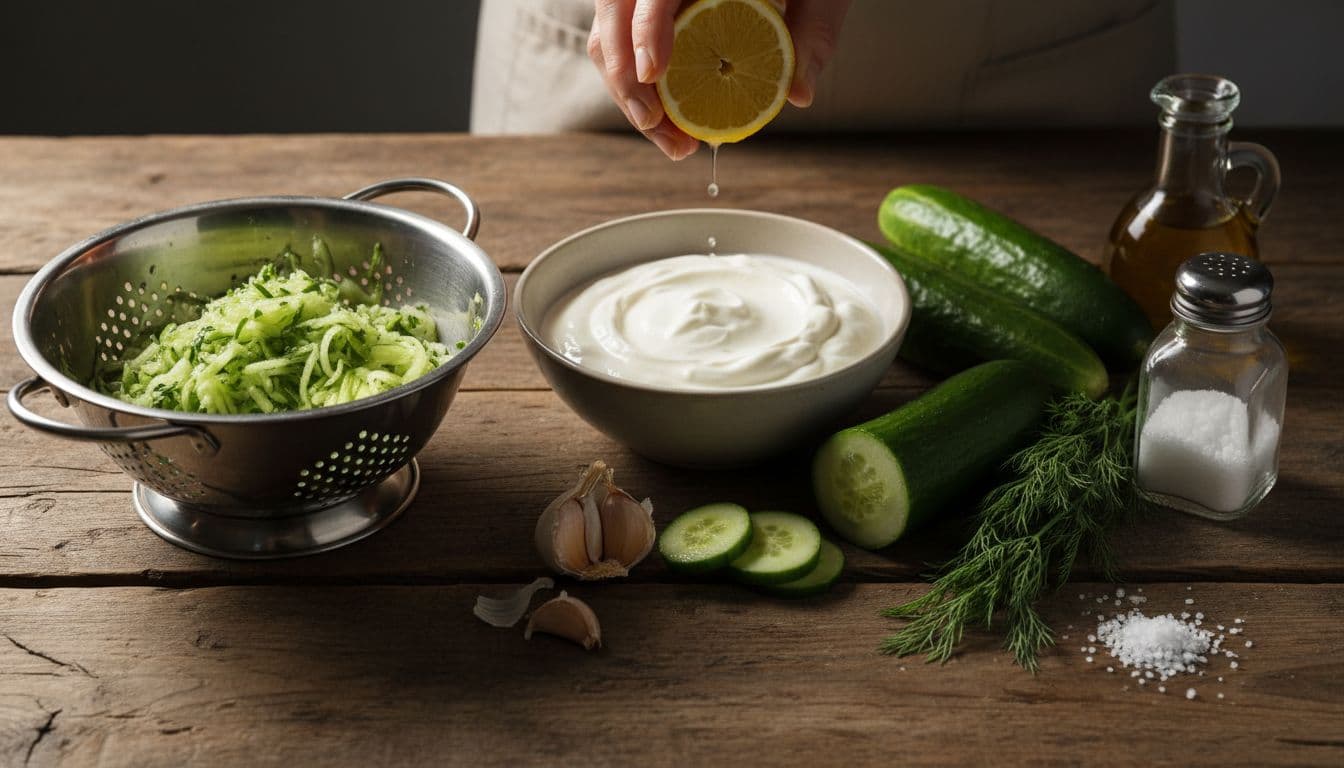
These are the staples I use every time.
- 1 cup plain full-fat Greek yogurt. I use thick Greek yogurt because it gives the sauce body, better flavor, and creamy texture. If your yogurt looks loose, the finished sauce will too.
- 1 small English cucumber, or 1/2 of a large one, grated and drained. English and Persian cucumbers work best because they have fewer seeds and thinner skin.
- 1 to 2 garlic cloves, finely grated or minced. One garlic clove gives a mellow bite. Two cloves push it closer to bold, gyro-shop flavor.
- 1 tablespoon fresh lemon juice. Fresh juice keeps the sauce bright and sharp without tasting harsh.
- 1 tablespoon chopped fresh dill, chopped fresh mint, or a mix of both. I reach for fresh dill most often, but fresh mint gives the sauce a cooler finish that I love in bowls.
- 1 tablespoon extra-virgin olive oil. A small pour adds richness and smooths out the yogurt.
- 1/2 teaspoon kosher salt, plus more to taste. Salt pulls the whole sauce together and keeps the cucumber from tasting bland.
If I only have regular plain yogurt, I strain it first to make strained yogurt for about 30 minutes in a fine sieve. That extra step helps a lot. Thick yogurt and drained cucumber are what give this sauce its scoopable texture.
How I make tzatziki thick, fresh, and not watery
This is the part that matters most. If cucumber water gets into the bowl, the sauce thins out fast and turns soupy by dinner.
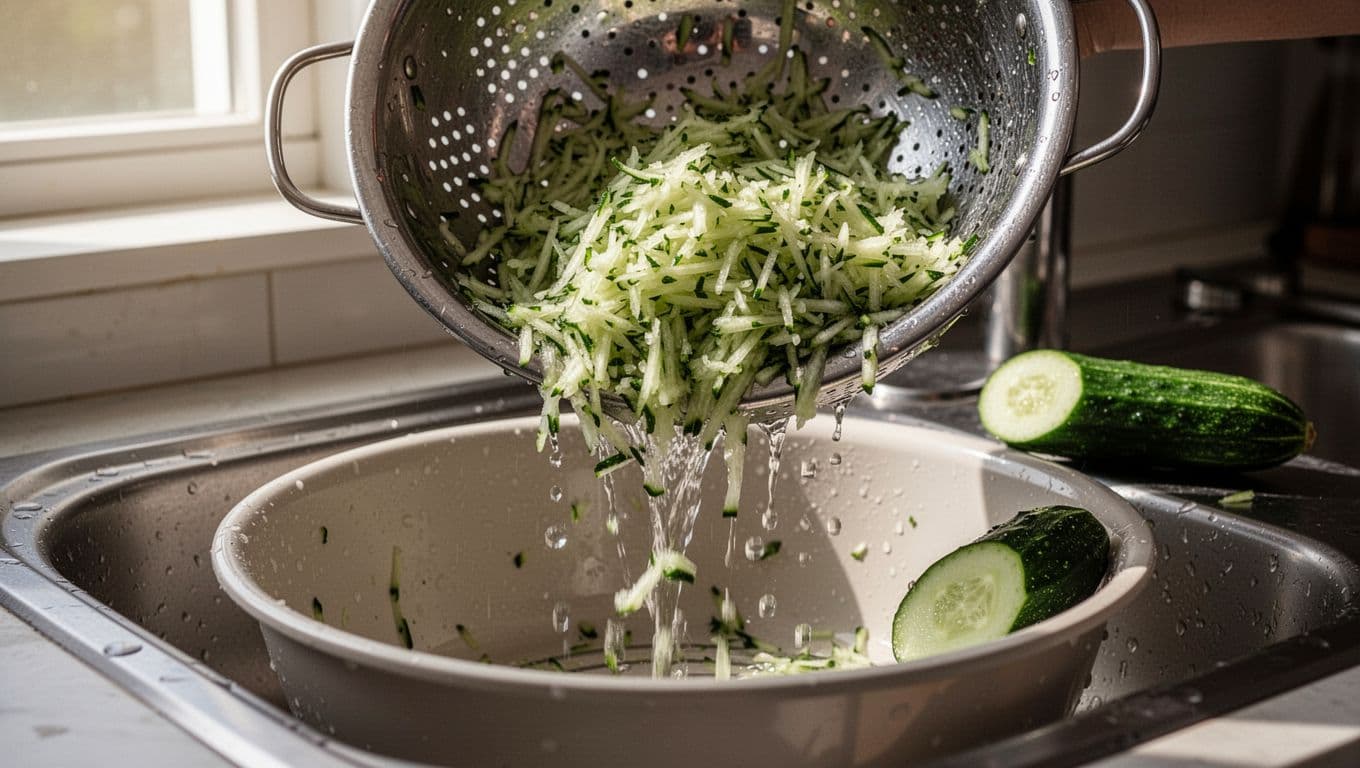
Draining the cucumber well keeps the sauce creamy.
- First, I grate the cucumber on the large holes of a box grater. If I’m using a regular garden cucumber, I peel it and scrape out the seeds first. Then I gather the grated cucumber in a clean kitchen towel or paper towels and squeeze out excess water as much as I can to prevent thin sauce. I want it damp, not dripping.
- Next, I stir together the Greek yogurt, garlic, lemon juice, fresh dill or mint, olive oil, and salt in a bowl. I mix this base before adding the cucumber because it lets me taste the tang and garlic level early.
- Then I fold in the drained shredded cucumber. At this point, the sauce is ready with its creamy texture, but I like it better after 15 to 30 minutes in the fridge. The garlic softens a bit, and the herbs spread through the yogurt.
- Finally, I taste and adjust. If it feels too thick, I stir in a teaspoon of lemon juice or cold water. If it tastes too tangy, I add a little more yogurt. When it needs more freshness, I add extra dill or mint. If it falls flat, I add another pinch of salt.
Drain the cucumber until it feels almost dry. That one move keeps the sauce thick and spoonable.
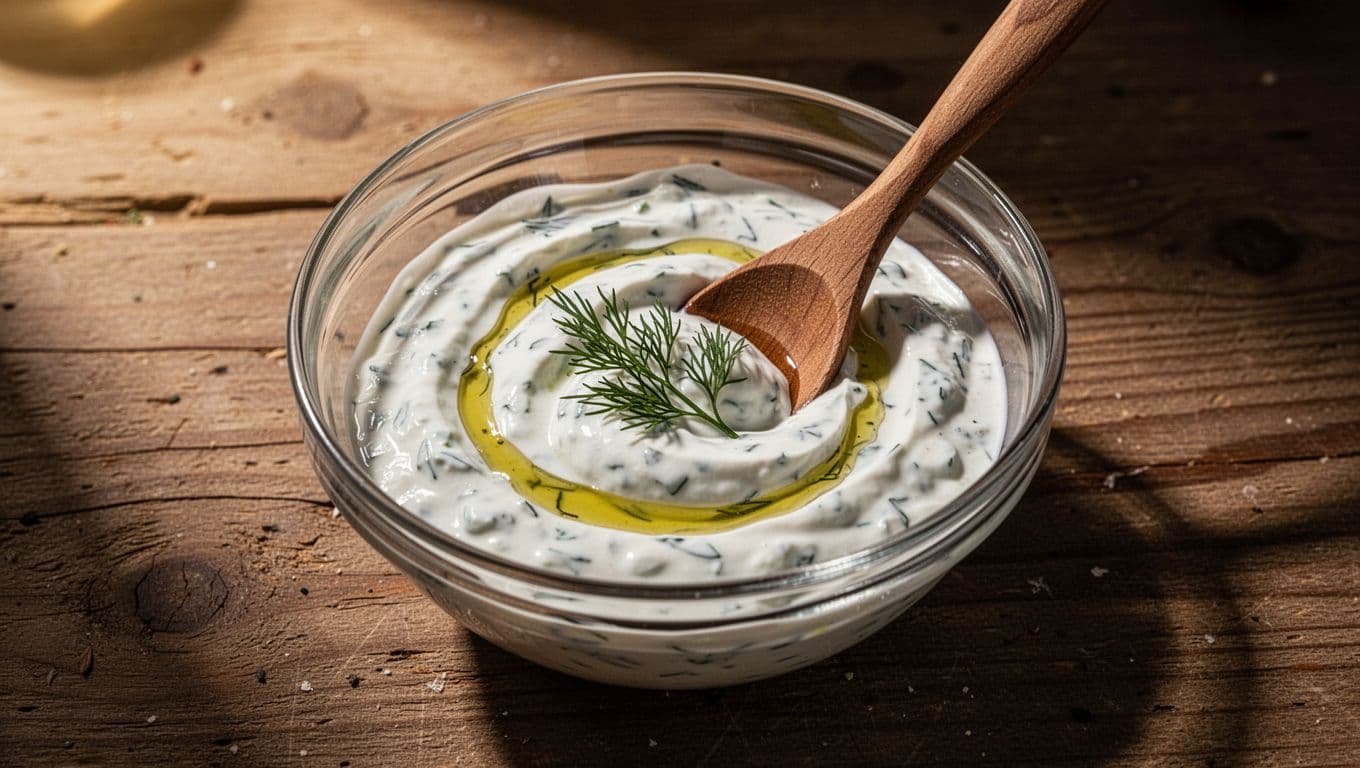
Once it’s chilled, the texture gets even better.
I don’t skip the chill time when I can help it. Freshly mixed tzatziki tastes good, but rested tzatziki tastes balanced. The garlic settles, the cucumber blends in, and the whole bowl feels creamier.
If you’ve ever made a watery batch, the problem was almost always one of two things: loose yogurt or wet cucumber. Fix those, and this sauce behaves every time.
How I serve it with gyros, bowls, wraps, and veggies
This sauce earns its place because it works with more than one meal. I make it for gyros first, but I end up using it all week.
A warm gyro with cold tzatziki is one of my favorite contrasts. I spread it inside pita, then add grilled chicken souvlaki, lamb, or beef with tomato, onion, and lettuce. It also works in wraps, especially when the filling is a little smoky or salty.

It turns a good gyro into a great one.
I spoon it over grain bowls too. Quinoa, rice, couscous, or farro all work. Add chickpeas or grilled chicken, pile on cucumbers, tomatoes, grilled veggies, or feta, and a few dollops of tzatziki pull the bowl together better than a bottled dressing ever could. It even pairs well with falafel for extra flavor.

I use it like a cool, creamy topping for bowls.
Beyond that, I serve it with grilled meats and simple sides. It’s great next to chicken skewers, lamb meatballs, salmon, shrimp, roasted potatoes, or charred zucchini. I also put out a mezze platter with pita bread wedges and raw vegetables when I want an easy snack board. Carrots, peppers, radishes, and cucumbers all love it.
Because it’s cool and tangy, it balances rich foods well. At the same time, it gives plain vegetables and grains more life.
Easy swaps, storage, and make-ahead tips
I stick to the classic version most often, but this recipe bends without falling apart. If your fridge looks a little bare, these swaps still work well.
| If I don’t have | I use | What changes |
|---|---|---|
| Whole-milk Greek yogurt | 2% Greek yogurt or strained plain yogurt | The sauce is a bit lighter or slightly looser |
| Dill | Mint or flat-leaf parsley | Mint tastes cooler, parsley is milder |
| Lemon juice | Red wine vinegar | The tang gets sharper |
| English cucumber | Persian or seeded regular cucumber | The flavor stays close, but draining matters even more |
| Greek yogurt | Dairy-free cashew-based yogurt | Creates a vegan version; strain well for thickness |
If I use plain yogurt that isn’t Greek-style, I strain it first to make strained yogurt. That keeps the texture closer to what I want. I don’t recommend skipping fresh herbs unless you have to, because they give the sauce its clean finish.
For storage, I keep this homemade tzatziki sauce in an airtight container in the fridge for up to 4 days. It often tastes better on day two. You may see a little liquid collect on top, and that’s normal. I stir it back in, then taste for salt before serving.
For make-ahead meals, I usually prepare it a few hours early or the night before. If I want the thickest texture for a party, I mix the yogurt base ahead and stir in the drained cucumber closer to serving time. I don’t freeze it because the yogurt can split and the cucumber loses its texture.
Frequently Asked Questions
Why does my tzatziki turn watery?
The most common issue is wet cucumber or loose yogurt. Always grate the cucumber and squeeze out excess water in a kitchen towel until it’s almost dry, and use thick full-fat Greek yogurt—or strain regular yogurt first. That keeps the sauce creamy and spoonable.
What type of cucumber works best?
English or Persian cucumbers are ideal because they have fewer seeds and thinner skin, so less water. If using a regular garden cucumber, peel it, scrape out seeds, and drain extra well. Draining is the step that matters most either way.
Can I make vegan tzatziki?
Yes, swap in dairy-free cashew-based yogurt and strain it well for thickness. Stick to the other ingredients as is—they work perfectly. It holds up great for bowls and wraps.
How should I store homemade tzatziki?
Keep it in an airtight container in the fridge for up to 4 days; it often tastes better on day two as flavors meld. Stir in any liquid that collects on top and taste for salt before serving. Don’t freeze it, as the texture suffers.
Why this sauce stays in my fridge
A good tzatziki doesn’t need a long ingredient list or much work. It needs thick yogurt, bright lemon, fresh herbs, and most of all, well-drained cucumber.
That one detail keeps the sauce creamy enough for gyros and spoonable for grain bowls. Once I have a bowl ready in the fridge, lunches, wraps, grilled meats, pita, and even plain vegetables get a lot easier to love. The secret lies in proper cucumber preparation, making this tzatziki sauce recipe the ultimate accompaniment for Mediterranean dishes.